Showing posts with label #babishaiexperience. Show all posts

Thursday, April 7, 2016

ADJEI AGYEI-BAAH, A HAIKU JUNKIE AND #BABISHAI2016 FESTIVAL GUEST

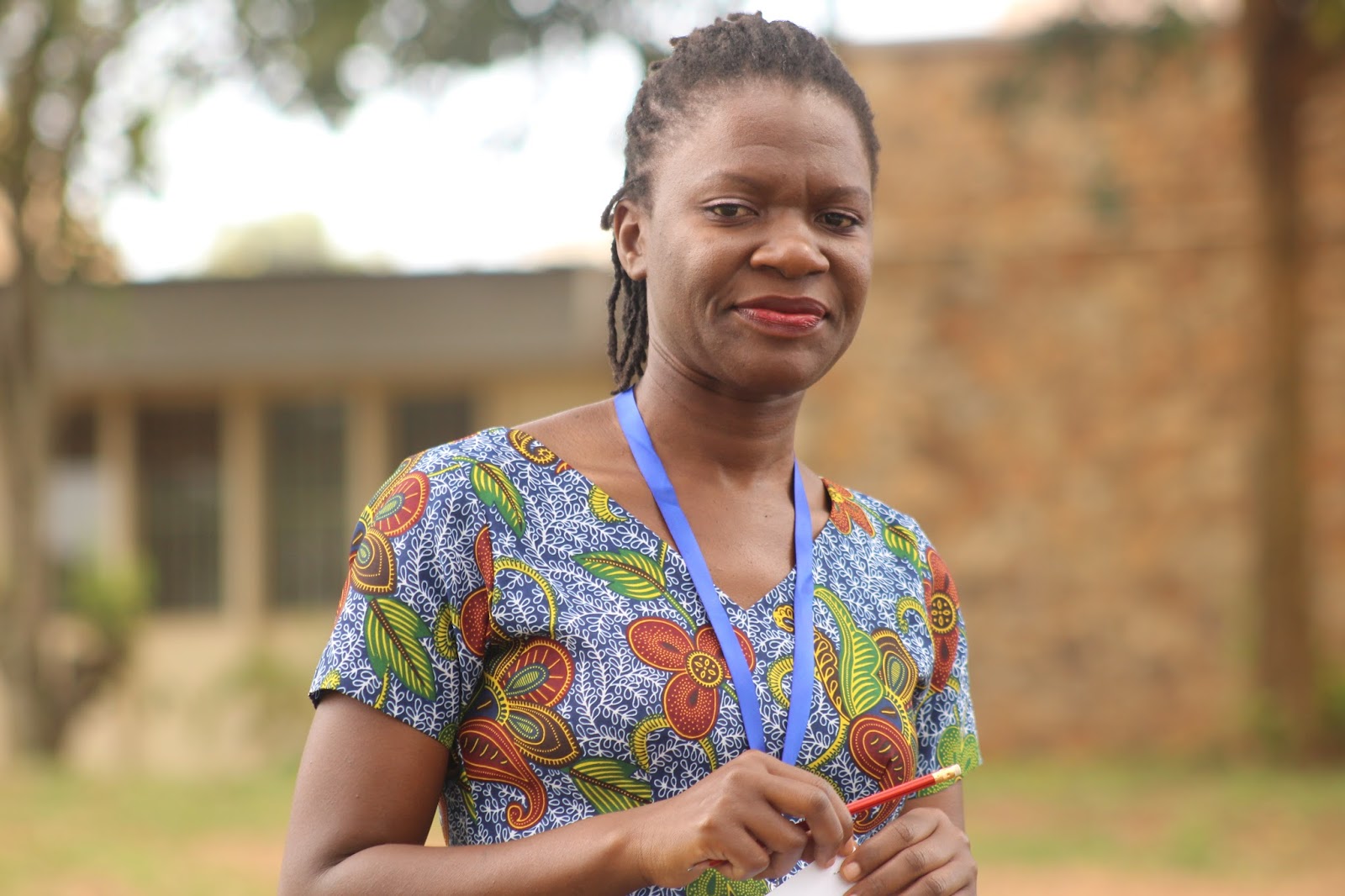
 Adjei Agyei-Baah is the co-founder of the Africa Haiku Network, editor of Mamba Journal on Haikus, judge of the #Babishai2016 Babishaiku Competition and guest at the #Babishai2016 Poetry Festival in August.


Adjei Agyei-Baah (Courtesy photo)

        Babishai is so pleased that you took up the position as judge for our inaugural Haiku competition, or Babishaiku. As the co-founder of the Africa Haiku Network, which you co-founded with Emmanuel Jessie Kalusian, you hold strong values connecting Haiku to African language. Share a few please.

Yes, Africa can ‘nativise’, and even translate and write haiku in our widely spoken indigenous languages like Swahili/ Kiswahili etc... in order to become part of our literature thought at schools and colleges. But I think connecting haiku to only our language would display a limited role and benefit and would be appropriate if extended to embrace our culture and values in its entirety. In fact, I still see haiku among the less explored arts that Africa can take advantage of in telling her story. Its brevity and power of delight can easily cause people to stop and read,especially in this technological age where people have limited time,to read lengthy texts and images generated by the various applications and social media platforms. In such situation, haiku then becomes a teaser or bait to entice people to pause and read for a moment.
     Surely, haiku can be used to record our daily observations and happenings in our environment. For instance the haiku below captures the pitiful sight of the deplorable state most Africa’s railway networks, which presently have their tracks going rusty, compared to the advanced Germany’s Sky and Japan’s Bullet Trains, which travel at lightning speed:

         end of road—/railway truck runs/ into earth
        And by this simple haiku, awareness can be created for people in authority to give such as   state the needed attention or becomes a call toinvestors to come downto salvage the    situation:

Similarlya haiku can be used to tell Africa’shistory to the generation yet to come, be it good or bad. In the haiku below, I share a rich historical experience with readers on my visit to the Cape Coast Castle in Ghana (formerly called the Gold Coast), where the colonial masters left forts and castles as colonial monuments after the collapse of slave trade that have become haunting structures of terror showcasing to some of the atrocities committed against the black race.

On top of these castles, remain their planted cannons, mockingly acting as sign-posts, pointing the direction were they came in and the route where they exited:

castle cannons― /pointing where/ their owners gone by

Indeed, haiku as art has so many benefits to Africa but would prefer to speak extensively about it some other time to come.

       The Mamba Journal is Africa’s first single Haiku publication. How have audiences responded to it so far?

Response have been so far great, in fact we received congratulatory messages from almost all international haiku journal editors/ founders like Shamrock, Heron’s Nest, Cat tails, Paper Wasp, Modern Haiku etc. and other haiku societies and lovers around the world. In fact, they were happy for our feat, in finding Africa a spot on the world haiku map. But from Africa have been few messages since the haiku art is not much known and even seasoned poets and academic institution have not been practicing it. Prof. Wole Soyinka was happy about our historic breakthrough and sent us his first haiku which we hope to publish in our 2nd edition, if he grants us permission.

       Do you write Haiku in any other language apart from English?
Yes, I have often translated my haiku into my mother tongue, Twi, the widest spoken language in Ghana. Fortunately for me, some of my haiku(s) have also been translated into Japanese, Romania, Russia, French and German. But I have the intention of translating my upcoming collection “Afriku” into Swahili and other international languages such as French, Spanish and Chinese for these countries to also experience and appreciate our unique seasons and settings outside their own.

      Ghana is heavily invested in the arts. Which arts and culture events do you always attend while there, and why?

I am devotee of poetry and spoken word, for I see these two art as channels to create social awareness, as a means of talking about the corruption and bribery in high places, the church taking advantage of poor, the commoner overburdened with taxes and also as a mean of providing entertainment to ward off our daily stress.

      How important is it, in your opinion, to conduct poetry competitions for Africans living in   Africa?

It is a smart way of telling the African story by Africans themselves to their unborn generations, rather than leaving it in the hands of foreigners who may record it with ugliness. It’s like making an effort to define oneself before someone else does it for him.

      You have been a judge before for a Haiku competition. Describe that experience.
Nope, this is my first time, but would say as a co-editor and aficionado of haiku, I have regularly been mentoring and editing chunk haiku everyday. The difficult part has always been sending a “rejection” mail to a submitter, it has always been quite hard. You have go about it in a “fine” way so as not extinguish the feeble fire of first-timers. Most at times too, there are friends, who want to take advantage of their friendship with you, to force you to accept “anything” they pen as haiku for publication. And here is where I stand my grounds, since a good editor need to be a bit ruthless, so as to separate the chaffs from the grain.

       Do you use Haiku to woo women?
Eish… I wish I could but not in its wrong sense but would rather want to entice them with it. In fact when it comes to haiku in Africa, its rather unfortunate that only few women are doing it.On the international scene, I can only point two heads, Celestine Nudanu (from Ghana) and Nshai Waluzimba (from Zambia) who are devotees and have received commendation for some of their haiku pieces.

         What diet is best for poets, in your opinion?
Hmmm, this is quite a tough one. Honestly I am stuck here. But I will recommend any food that ward-off stress and make them stay up refreshed at night and write their heart out.

      At the Babishai Poetry Festival this year, what three things do you expect?
I expect to meet new young African poets, not the same old faces we already know. A little freshness, will surely spice up the show. I hope to see a lot of books, more especially anthologies to get know of what is happening in the world of poetry in other Africa countries, most especially from East Africa. I think my people back home will be delighted to know about it and will as well love to witness some performances which I will personally love to perform one or two poems from my upcoming collection “Embers of Fireflies”.

      Any parting remarks?

Thanks for this opportunity to share my thoughts with the world, in my quest to promote Africa to find her rightful place of the World haiku map.


Thank you

The #Babishai2016 poetry festival runs from 24-26 August in Kampala. Contact us at festival@babishainiwe.com


Wednesday, September 9, 2015

Friday, July 31, 2015

PROFILING FAMIA NKANSA (GHANA) #BABISHAI2015 SHORTLIST

As a young reader who devoured everything she could get her hands on, Famia Nkansa rarely came across narratives about people who looked or lived like her. She consistently encountered the subliminal message that African stories were not worth narrating. What she was supposed to take from this, it seemed, was that African lives did not quite matter. She became a writer because she is convinced they do. She believes that work which shows the multifacetedness of African identities—the sites of contradiction, the multiple interpretations, the nuances and complexities—needs to exist and be disseminated. Without it there is a chasm. And everyone is less for it. Her essays, poetry and fiction explore silence, power, illness and sex and try to tell the full, true, human stories of the invisible and the forgotten.


Elixir  by Famia Nkansa (Ghana)

When you touch me
My pores turn to pupils
I can see you in the crevices of my skin
You leave footprints under my eyelids
Your soles azonto on my irises
I touch my face
breathing your taste into my fingers, your fear into my fury
I cup fireflies in my palms
Cradling them as they flicker
on and off…on and off…

There is residue from us
Glued together
Like tape to paper

If the earth splits
wide like a plum squished in the sun
Will the rays reflect the thin-veined blood
smeared like grease on the cusp of the sky
The threadbare frays of cumulus clouds
The simper of thunder whispering air into the
mouths of shooting stars

If the earth cracks
like a spread-eagled spine
florid, translucent as the dew
gliding
down the underside of a grape
the limpid drop
poised
crouched
gone.
And the earth rips,
split, like an expanse of belly
will you
still
traverse
the ends
of the horizon
to bathe
in the
oasis
of my tongue?


The Babishai Poetry Festival runs from 26 to 28 August at The Uganda Museum, Kampala.

Tuesday, June 16, 2015

PRESS RELEASE-OFFICIAL LAUNCH OF #BABISHAIPOETRICKS


PRESS RELEASE-16 JUNE 2015, OFFICIAL BABISHAI POETRICKS LAUNCH ON THE DAY OF THE AFRICAN CHILD

Today, we are thrilled to officially launch #babishaipoetricks, the children’s adventure toolkit. Babishai Poetricks is the largest program under the Kampala based Babishai Niwe Poetry Foundation. The Foundation runs the annual BN Poetry Award and publishes poetry.
Babishai Poetricks is a toolkit captured in eleven adventures, each of which increases a child’s ability to reach the highest creative and literary potential. By using very interactive exercises, a child engages in creative listening, speaking, describing and introspection. Each exercise enables a child to freely analyse their environments and relate them to their personalities, thus bringing a deeper understanding of themselves. Once they do this, their abilities to use poetry and prose to illustrate and observe are highly sharpened. Every child should experience Babishai Poetricks.

Currently, we are conducting Training of Trainers in Uganda and trainings within schools. These are charged at a reasonable fee, given the life-changing exercises. We will also train in Kenya, Cameroon, Nigeria and South Africa for the first three years. The Babishai Poetricks toolkit, produced by Beverley Nambozo Nsengiyunva, Ugandan writer, poet and Founder of the Babishai Niwe Poetricks Foundation is a program that is timeless, memorable and is the essential means for children to grow from where they are to where they can be.


Big Bear Kindergarten children sharing their #babishaipoetricks experience

Teacher Joyce, who underwent a Training of Trainers says,
 “This is so important because it helps teachers to learn various adaptations to use in classroom exercises. It is so much broader than what our teacher-centered system provides. It’s a true experience.”
Teachers, Parents and schools are particularly going to benefit from this model as they witness their children growing into articulate and confident wordsmiths, poets, speakers and individuals. Many thanks to Ayodele Olofintuade, a writer from Nigeria and Paul Kisakye, a writer from Uganda, for contributing their invaluable poetry to this toolkit. Many Thanks to Gilgal Media Arts for publishing and to the schools that have already embraced it.

The full story is here, http://www.bnpoetryaward.co.ug/download/newest-brochure.pdf
For more information, contact

Beverley Nambozo Nsengiyunva
Head Trainer and Director Babishai Niwe Poetry Foundation
Email: bnpoetryaward@bnpoetryaward.co.ug
Tel: +256 751 703226


Thursday, June 11, 2015

#babishaipoetricks Training of Trainers at Big Bear Kindergarten, Kampala


On 9th June, the first Training of Trainers of the #babishaipoetricks children’s adventure toolkit took place. Our hosts, Big Bear Kindergarten in Kampala, were absolutely thrilled at the opportunity. There were four trainees namely Teacher Joyce the proprietor, Teacher Rinju the Director, Teacher Nakiganda the Headmistress and Teacher Diana a teacher. The objectives of the training were to share skills from the toolkit on how to guide children into understanding and appreciating #babishaipoetricks. The Babishai Poetricks toolkit is an experience for children aged 4 to 11 years. In it are eleven adventures which aim to instill life-skills, sharpen observation skills, creatively engage a child to interact, listen, speak from the heart, use images to relate and become introspective. The training covered three of the eleven adventures.

In the first adventure, the trainees drew pictures of their faces, allowing others to describe what they saw. Through this, we are able to see ourselves in other people’s eyes and also analyse how we see ourselves. Children will most likely laugh at the funny shaped noses and mouths but the trainers should use that for children to appreciate their own looks. By doing that, the creative space opens up for them, along with their confidence. The pictures turned out hilarious but on a deeper level, reflected a lot about the personalities that day.

Next, we matched moods to colours. Interestingly, while black was considered sorrowful, it was also considered adventurous. You see, in this toolkit there is no wrong answer. Instead, children are encouraged to articulate, analyse and reflect. An adventure may either take 1 hour or 1 week, depending on the group dynamics. That is what #babishaioetricks is about. It’s an experience.
When it came to tackling the five senses, we had to end there because our 2 hours were up. There are many uses of the mouth and nose that many people are unaware of. It was a true life-changing training.
Testimonials

Teacher Rinju, Director of Big Bear Kindergarten:
“This training of training was extremely helpful, practical, very interactive and enables children to really think.”

Teacher Joyce, Proprietor of Big Bear Kindergarten:
“This is so important because it helps teachers to learn various adaptations to use in their classroom exercises. It is so much broader than what our teacher-centered system provides. It’s a true experience.
 
These are the first certified Babishai Poetricks trainers. We look forward to training more trainers.
Note:
Training of Trainers are currently taking place in Uganda, after which we will branch to Kenya, Nigeria, Rwanda and South Africa. In order to train from this toolkit, you must be certified. The Trainer fee is 50 USD per individual and takes from 2 to 3 hours. There are packages for schools as well. Join us and become certified.

Tuesday, May 12, 2015

These poets mean business: From us to you


Be Prepared To Be Misunderstood! Poets See The World Through The Lens Of Perception And Expression. Poetry Is Your Personal Journey Through Life. Find Your Voice And Rejoice.
Ife Piankhi, The Poet who Sings

Write a poem a day, or even just a line or a stanza. It makes writing poetry get easier and better with every new line. Write about what you feel, see, hear or imagine. Forget the poem you read for a minute and create your own words, your own world ~ and you'll achieve an originality that'll surprise you.
Harriet  Anena, author of A Nation in Labour

 Read widely around your art. Then write with out internal criticism. Then be open to feedback from writers of merit. 
Nick Makoha, Winner of 2015 Brunel University African Poetry Prize

A poem is a musical form - it's meant to move the air as well as sit on a page. Poems are not just about self-expression - your feelings have to become feelings for your readers for them to care.
Graham Mort, Center of Transcultural Writing, Lancaster


First, write, write and write some more. Then be a cruel editor: the scissors are as important as the pen, but you have to have something to cut first. When you're not writing or editing, read. Read what others have done, read eclectically. And don't forget to have a life! Live it to the full! You only get one! Don't waste it!

Reuben Woolley, Author and Creator of I am Not a Silent Poet

Treat all words with suspicion, use as few of them as you can. For those few, test them hard so they yield essence only. Else, write for beauty's sake.
Richard Ali, author of City of Memories, BN Poetry Board member

I write/read best/more when all of my senses are triggered and i am able to see, hear, smell, feel, touch beautiful things all at the same time...:-)

Sahro Ahmed Koshin, Founder Puntland Women Writers Association

 'Read what kind of books you want to write. Read, read, read. You can't know what's working and what's not except from intensive reading.'
Okwudili Nebeolisa, Poet

Give yourself a formal challenge when writing - organising lines, stanzas and overall poetic forms can help to keep your work tight and powerful,
Graham Mort, Center of Transcultural Writing, Lancaster

If a poem decides to dance, dance with it. If a poem decides to fly, then grab your wings, baby. When you’re done, re-write the poem beginning with the most exhilarating moments to the least and then chop out all the forgettable ones.
Beverley Nambozo Nsengiyunva, Writer


Poems work because of what is implied as well as what is directly said - give your poems depth and silence. Beware of explaining things in a poem - your reader is intelligent and aware so don't lead them by the hand.
Graham Mort, Center of Transcultural Writing, Lancaster


The process of creating could be painful sometimes. You have to write, erase sometimes, re-write, wait, erase everything, start again, and other times, leave. It's important to understand the place your words come from, to have an inner voice of reason and direction, to have connection with the place inside you that feels even the smallest emotion, so as to write boldly and naturally. You have to be yourself to write anything believable.
Eric Otieno Onyango, Kenyan Poet and Mara Mentor

Never rush your writing; if you do, you’ll struggle to make sense of it half the time, and your readers, whom you’ve been hoping would find delight in your creation, will certainly be denied that very delight. A poem doesn’t have to feel, or sound, complete once you’ve written it down or tuned it a bit a few times. A poem at first glance, I think, just wants to be left alone for a while. Don’t fret, but only give it some space and distance just long enough for it to simmer down and take a shape you never knew could be worth your while. –
Uchechukwu Peter Umezurike, poet, short story writer and children’s novelist

Extraordinary poets dare to express what is perceived as inexpressible; they walk into the unknown and bring out words that seem ordinary yet unearthly to the world. Oh! Poets should always take their poems to the barber shop for a nice haircut.
Saddiq Dzukogi, Poet


To say so much in statements so short To sound so subtle in sentiments so strong To strike such rhythm in stanzas so lyrical To summon such imagery in scenarios so vivid Is to string words together into what they call poetry.
 Tom Jalio, BNPA 2014 winner (@tjalio)

"As the saying goes- "Habit trumps desire". If you are a writer, you have to be writing. Write everyday. Set targets and meet them. Keep reading, keep learning, keep growing. 
Do not try to be a person you are not. Great writing is genuine and true. Remember to have the time of your life while at it :-) "

Roxanna Aliba Kazibwe, author of  My Love is Not Afraid

A poem is equal to the speed of light and love. And so a poet should live with the speed of light and love. Put simply, as is lovemaking so is poetry. Feel everything within and outside the margins of your blue-paper-bed and your heart. Poetry is a gift just as the heart is; hence, poets give their hearts to other hearts. This is what lovemaking is, as I see and feel it.
David Ishaya Osu

Figurative language can be much more rewarding than straightforward description - metaphors and other allusive forms of language can create delight and deep engagement. Always be careful how you sign off at the end of a poem - don't tag on the 'message' of your poem - let the reader work it out.
Graham Mort, Center of Transcultural Writing, Lancaster


Read, read, and read, I can't emphasize that enough: there's no such thing as enough reading for a writer. It's the only way you will broaden your knowledge, imagination, creativity, and it goes a long way in helping you find your voice as a poet. 2. Write about small things, big things, important things, seemingly unimportant things, write about anything, in a fresh way, a way you would want a poem you were reading to sound. 3. Edit, rewrite, edit, rewrite; sometimes it's good, sometimes it's bad. Sometimes it's easy, sometimes it's hard. Just keep at it.
Lillian Aujo, BN Poetry winner, 2009, Jalada winner, 2015


Never forget the reader and try to put yourself in their position. Writing is re-writing - a poem should go through many drafts to reach final form. Read your poems aloud to test their rhythms, language and form. A poem on the page is a visual object and should appeal to a reader through its shape and form. Every word in a poem should earn its keep. Take risks - write the poem you didn't know you could write instead of the one you did. Read poetry - as much as possible from every era.
Graham Mort, Center of Transcultural Writing, Lancaster

Monday, March 23, 2015

#BABISHAINIWE #WORLDPOETRYDAY EXPERIENCE, WRITTEN BY ROXANNA KAZIBWE


#babishainiwe experience in Kabale, #worldpoetryday
On Sunday 15th March,  Babishai Niwe Poetry Foundation team leader Beverley, together with Kidron and I made a trip to Kabale in preparation for the Language day event and World Poetry day celebrations that were to take place at the Kabale University on Monday 16th March.
It was my first ever trip to Kabale and boy was I psyched. I’d been told of its winding steep roads; its cold weather and the abundance of Irish potatoes. I was looking forward to having my own experience of these. Beverley had also told me of a similar University outreach that they had done in Kibaale at African Rural University and the delight of sharing poetry and language with young minds pulled at me.
I must say I was pleasantly surprised by the spirit of the students at the Kabale University. Our contact was the Dean of the Institute of Languages, Lillian Tindyebwa (a warm, humble lady with great talent who I discovered she is the author of Recipe for Disaster, a book I read as a child). Anyway Lillian introduced us to the students who were already waiting in the tents on the school ground. The students had a profound respect for one another, cheering each other on as they made presentations in different styles and languages; songs in Runyakitara, rapping in Swahili, spoken word in French, poems in English, recitals in Rukonjo and Rukiga. I was so impressed by their confidence in expressing themselves and the way diversity in language was embraced and even welcomed.
During our break away sessions, I had a group of 31 students and we kicked off our session with a get-to-know game called the Cold wind blows. This game involves opening up about yourself and finding others who are like you. There were some articulate, eager to speak individuals (one of the outspoken people in my group was also standing for guild president at the University) and some reserved people who needed cajoling to speak. After we had loosened up we shared about writing and where we get our inspiration. This was just before I asked them to break into groups, come up with a group name and in seven minutes compose a chant, poem or song from what they had observed/experienced that day.
After the performances, I ended our session with an exhortation to them to write and write some more as it is one of the best ways to influence the world and leave a legacy.
For me, it was all a breath of fresh air; the students’ confidence yet absence of airs, the people we met during our tour- Pam, a painter in her fifties who has life and laughter springing out of her she looks thirty, Eric, a rasta in his twenties who has the knowledge of a sixty year old professor and the kindness of one’s kinsman, Mama Francis the quiet lady with a small restaurant that offers a good service, Iga Zinunula, the entrepreneur/poet/farmer who is generous and wise. And lastly but definitely not least, the lake; Lake Bunyonyi, beautiful,calm, serene.
I look forward to more poetry initiatives with the BN Poetry Foundation and I’m extremely grateful for the opportunity.


Written by Roxanna Kazibwe.
Note: World Poetry Day is globally celebrated on 21st March every year and the BN Team will be organizing poetry excursions all over the continent, to celebrate World Poetry Day.


Friday, March 6, 2015

CELEBRATING WORLD POETRY DAY IN KABALE #BABISHAIEXPERIENCE


On 16th March, a group of East African poets from Babishai Niwe Foundation, will hold a massive celebration in Kabale, to commemorate World Poetry Day. This will also coincide with Kabale University Language Day. Being the first ever to initiate Kabale Poetry Day celebrations, the BN Poetry Foundation team will speak before hundreds of youth and adults, sharing about spoken word, verse, poetry, hip hop and oral narratives, to embrace poetry at a much larger scale across social and political landscapes in Africa.

This is the first of many Poetry Days across Africa. Every World Poetry Day, the BN Poetry Foundation will visit a town in an African country until the entire continent is immersed in poetry.

For details to participate in the #babishaiexperience, email bnpoetryaward@bnpoetryaward.co.ug

Sincerely,

The Team.