Showing posts with label Uganda literary festival. Show all posts

Monday, July 10, 2017

REGISTER FOR OUR THREE BABISHAI 2017 POETRY FESTIVAL WORKSHOPS


We have three #Babishai2017 poetry festival workshops, that require registration by 31 July 2017. You will receive certificates afterwards.


Date: Saturday 5 August 2017
Time: 11:30am to 1:30pm
Trainer: Mbizo Chirasha, leading poet from Zimbabwe, conducting a poetry seminar for 19-29 year-olds. Entry is free
Venue: 32 Degrees East/Kansanga, opposite Bank of Baroda

Date: Sunday 6 August
Time: 11:30am to 1:30pm
Trainer: Mbizo Chirasha, leading poet from Zimbabwe, conducting a poetry seminar for 30 years and above
Venue: The Uganda Museum
Fee: 5,000/-


Date: Sunday 6 August
Time: 2:00pm to 4:00pm
Trainer: Kagayi Peter, Ugandan performer, published poet and trainer, conducting a poetry workshop for 16+
Venue: The Uganda Museum
Fee: Free entry


Register by sending a 100 word bio and photo to babishainiwe@babishainiwe.com by 31 July. You may attend more than one workshop.

Tuesday, May 17, 2016

MAGUNGA WANTS TO READ MORE UGANDAN BLOGGERS

Magunga Williams a blogger and creative writer from Kenya will attend the #Babishai2016 poetry festival in Kampala, from 24-26 August. He was nominated for the 2016 #BAKEAWARDS-Bloggers Association of Kenya Awards and runs a large online bookstore.


1.       The Magunga online bookstore is thriving and making a large difference regarding accessibility of literature, how did this idea emerge?
It is one of those things I have always wanted to know. It stemmed from a heartbreak I had when I was a kid when a neighbourhood library was shut down after its owner passed away. I cannot even remember his name. But I remember how much I loved going to that place. It was my refuge. When we were sent home due to unpaid school fees, my brother and I would visit that library. It had so many storybooks.

Time passed. That heartbreak healed, like very few heartbreaks usually do, but like many heartbreaks, it was not forgotten. Fast forward to 2014-15 and my partner and I are walking around Nairobi bookshops trying to get her poetry collection into bookstore unsuccessfully. Then I realized many self published authors, and many other authors had trouble distributing and marketing their books. I saw a vacuum and nature did the thing it does with vacuums. Now here I am, managing an online bookstore from the comfort of my house. One step at a time, because that is how I was taught to do things.

2.       How may we support this fabulous invention of yours?
How can you help? I throw that question back to you. You read books. You consume them with so much relish. Tell me what challenges you experience and then we can have a conversation about how you think we can solve them. I want to reach as many Africans as possible with this venture. Put a book in as many hands as possible.

3.       Which are the most popular books so far, from the Magunga online bookstore?
Oh! Elnathan John’s book, Born On A Tuesday, lasted all of two days and they were gone. Same with The Fishermen by Chigozie Obioma.
Then there is Den of Inequities  and Last Villains of Molo  by Kinyanjui Kombani.

Ooooh! Any book by Zukiswa Wanner rarely stays for long. See, Zukiswa and Kombani have learnt that books are products like any other; you have to market them aggressively, and that is working very well for them.

(Do not tell my competitors, hehehe).

4.       What kind of poetry do you like to read?
I like easy to read poetry. The kind that affects you without your mind being forced to understand whatever is going on. Think Warsan Shire, Amu Nnadi, Abigail Arunga, Sheila Okong’o and Eric Onyango Otieno.
Woi! This chap called Saddiq Dzukogi is phenomenal.
I still do not know what the difference between poetry and spoken word is. Because Peter Kagayi is amazing.

5.       Were you surprised by your invitation to the Babishai Poetry festival last year and why?
Yes. I was surprised. Because I do not consider myself anyone of note in these literary circles, much less in poetry circles. I am a pretender. I know as much as Jon Snow.

6.       What do you expect from the festival this year?
I expect more fun. Last year was so well organized and so informative. Guests were treated well, the classes were just as good as they can get. Beverley is an angel. I can say that given the success of last year’s festival, then I am hoping to see a bigger crowd.

7.       Where would you place Christian literature in this secular world?
Hehehehe. You know everything has its own space, yeah? People who like stories will enjoy it regardless of whether it is Christian, Muslim, Hindu, Legion Maria, Polo Piach  or Atheist. Remember that book, My Book of Bible Stories that we used to read as kids? Loved that book. Not because it was Christian, but because I was entertained by the stories. Left to Tell by Imaculee Ilibagiza is a sublime story about a woman finding God in the midst of the Rwandan genocide. But regardless of it’s religious inclinations, the story is well told. But of course there are material that I do not see people other than those of that faith buying. For instance, many people will not read The Hand of God simply because they have no interest in it.

Am I making sense?

8.       Congratulations on your 2016 #BAKEAWARDS nomination, who are some of your favourite Ugandan bloggers?
Peter Kagayi
Harriet Anena
Soooo Many Stories
But you have to agree with me that Ugandans have not really taken to blogging like we Kenyans have. Your internet keeps getting shut down every time the Leopard wakes up on the wrong side of the bed.

9.       What food in your opinion, is best for writers?
The edible kind

10.   Any parting remarks?

Be a good sport and buy books. Sharing is caring with other things, but not when it comes to books. So go to www.books.magunga.com and make an order now. Haven’t you been told that the best place to be is in between the pages of a good book?

Wednesday, February 17, 2016

MEET OSWALD OKAITEI FROM GHANA-#BABISHAI2016 FESTIVAL GUEST

          Each week, we interview our guests coming for the #Babishai2016 Poetry Festival scheduled for 24-26 August 2016. In partnership with Praxis magazine, we want to share the power of poetry. This week, it’s Oswald Okaitei from Ghana, poet, performer and playwright.


1.       Oswald, thanks for agreeing to this. As a child, you acted in twenty episodes of a Ghanaian children’s drama series, By The Fireside. How old were you, what roles did you play and was that a foundation for your art?
You are welcome. I was 13 yrs to 15 years for the period of production. I played several roles. However  prominent amongst them include Agya Koo (KwakuAnanse’s good friend), The Hawk (As in the Hawk & Hen Tale), Nana YiadomBoakye (King) etc.
Yes, BY THE FIRESIDE has been the basis for my current arts status. It moulded me artistically and nurtured my interest for Ghanaian folkloric arts—especially my style of poetry.


2.       As a playwright who has written, directed and produced several plays including Beautyfyl Nonsense (A political comedy), Who Stole The Casket?(Emancipation tragic-comedy), When It Turns Red… (Peace play), In Man’s Libido and In The Bag Of A Woman (Social comedies) at the Centre for National Culture (Accra and Cape Coast) and the National Theatre of Ghana respectively, what is your process of engagement with themes? Do you have a cast always on standby and which is your own favourite play to-date?
Yes, Play House.kom, my Production House (a theatre company) has constant cast and crew.
All are my favourite but I think the most appreciated is IN THE BAG OF A WOMAN.
3.       You’re quite prolific.  In your emancipation-tragic comedy, Who Stole the casket?, kindly explain why it was categorised under emancipation and what you feel the play achieved? Thank you for the compliment. “Who Stole The Casket?” tells the story of how Africa lost her political authority and the journey to fetching it. The characters in the play are symbolical and in a quite simple way, explain what would seem a rather complex history.

4.       The main theme of the #Babishai2016 Poetry Festival is Abundance: Poetry from Contemporary Africa, how does that speak to you?

There are many phases (Evolved and original) of the African contemporary poetry and they have a lot to serve the society—immediate and farther.


5.       When you think of poetry in Uganda, what images come to your mind?
Ugandan tourism sites/ items.Uganda Poetry festivals, especially Babishai Poetry Festival, has done a lot of good works setting the tourism of Uganda in a portrait.

6.       During the #Babishai2016 Poetry Festival, we will hold a children’s poetry session under the sub-theme of Children’s poetry and its accessibility. How important do you think it is for African children to have poetry created for   them?
It is very vital and crucial: creating a generation of African poets who would grow to appreciate Africa and understand the role they can play in putting the African continent on the world map through poetry.

7.       What diet would you recommend for poets?
A lot of vegetables and natural foods.

8.       What are you looking forward to at the #Babishai2016 Poetry Festival?
A common platform where focus will be placed on celebrating a new generation of African poets and telling the world that beyond the known African Poetry legends, there is a promise of hope for the next generation in the field of poetry.

9.       Any parting words?
I believe that poetry has an immense contribution towards curbing the high level of unemployment in Africa and the world at large. Therefore, corporate institution/ governments should be ever ready to invest in that regard.

 Thank you Oswald.
For more festival details, email festival@babishainiwe.com


Wednesday, February 10, 2016

#BABISHAI2016 GUEST INTERVIEW-GRAHAM MORT


Every week, we publish interviews of the guests for the #Babishai2016 Poetry Festival, scheduled from 24 to 26 August in Kampala. Here’s Graham Mort, Professor of Transcultural Literature at Lancaster University , author of more than nine volumes of poetry and who can’t wait to return to Uganda.
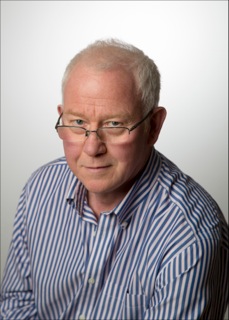

Graham Mort  (Courtesy photo)


1.      You have nine volumes of poetry to your name. Were there significant changes in your poetry after the first three volumes?
Well, I think it’s been more a process of evolution rather than rapid change. The first three collections explored some of the things I was most interested in – landscape and places, politics, violence, conflict, work, forms of social injustice. I think that my poems became more complicated after that period, so I’d try to build more themes into the same poem. I don’t like poems that preach, so my other preoccupation was trying to make poems that got people to think, but didn’t tell them what to think. So for me the personal and the political have always worked together, often with the underpinning of a very distinct location. The more I’ve travelled, the older I’ve become, the more those locations have opened out new dimensions in the poems.But one constant has been writing about birds in both my poems and my prose. One of my richest experiences of Africa was visiting lake Mburo in Western Uganda – the birdlife there is amazing and I found that very affecting. But even in Kampala there are birds everywhere, the most I’ve seen in any city in the world. So they’re a constant thread through my work that’s been there from the beginning, though they’re never really just about themselves. I guess they’re emblems of flight, freedom, the ability to soar above everything and look down in a predatory way, like writers.


Students at the 2011 Lancaster University Summer school where Graham Mort teaches.


2.      Last year you visited Vietnam to talk about poetry. Briefly describe the objectives and outcome of that visit.
This was a visit I made to the Asia Pacific Poetry Festival in Hanoi. It was large event mounted by the Vietnam Writers’ Association that brought together about 100 poets from all over the world – many from current or former communist bloc countries such as Cuba, Poland, Czechoslovakia, China, and Russia. But also from Indonesia, the US and – of course, me from the UK.  Like many people of my generation, I grew up with the Vietnam War raging on the news media, so that was a formative time in terms of our political beliefs and affiliations. It was very moving to see this beautiful country, still in recovery, and to meet such a graceful people who had managed to defeat the military might of the US through sheer persistence and self-belief. It was also very moving to meet American veterans who had fought in Vietnam through conscription, but had found the courage to go back there and meet Vietnamese writers, who have since befriended them.  The aim of the festival was to create insight into Vietnamese culture and poetry and it certainly did that in a powerful and long-lasting way.

2015 Writing for Liberty Conference at Lancaster University
3.      In 2002 and 2003 when you launched the Crossing Boarders Writing Mentorship scheme in Sub-Saharan Africa. What were the major changes you saw in writing amongst the writers of the program?

I’d been writer–in-residence at Makerere University for the British Council in 2001 and I fell for Uganda and its people almost from the moment I stepped from the plane. There I was in Uganda for the first time with no one to meet me, this shy Englishman, yet it was just extraordinary. During my visit I met many young writers whose work was influenced by rather archaic models of poetry and, at that time, there were virtually no Ugandan writers on the school curriculum. So it felt as if writers working in English had a very outdated sense of contemporary writing in English. When I built a team of mentors in the UK, I wanted to find professionals writers who also represented the cultural diversity of the UK. When they came together with young Ugandan writers – and later with those across sub-Saharan Africa – I think there was a recognition that we were working together in a common purpose of cultural exchange and writing development, not in a hierarchical relationship as teachers and students. In fact, we were very were keen to avoid that perception. Uganda was conspicuous because of the way that young writers gained confidence in their work and in their own voices. They began to publish their writing and to win significant literary prizes. But this wasn’t just one-way traffic, the writers who worked as mentors from the UK all visited African countries and that had a profound affect on many of them.

4.      Your session at the #Babishai2016 Poetry Festival is called Working with Words. Who is your target and what can participants expect?
I haven’t worked out the fine details of my workshop yet, but I want to get down to the idea that the work of poets is to build poems in the way an engineer builds a complicated structure, or the way a composer harmonises a piece of music but includes dissonant elements. It’s important to understand the nature of the materials we’re using: the extraordinary energy and potential of language, the interrelatedness and inherent ambiguity of words. The American poet, Robert Lowell said that a poem doesn’t just describe an event: it is an event. By that he meant it was an event brought about by language that happens in the realm of language. The ability to speak about how we think, feel and experience the world is uniquely human, it expresses our individuality and difference, but also the solidarity that takes place between humans when we communicate. I’m hoping to provide a workshop for anyone interested in the ability of language to describe this world whilst inventing other ones. Oh, and I should say that a sense of humour will be essential!

5.      Why was it important for you to accept our invitation?
When I first came to Uganda in 2001 I was received with warmth and generosity by everyone I met. In a way this helped me to understand things about myself – a middle-aged writer from the northwest of England caught in the vortex of a Ugandan general election, with all the tensions of that time sparking around me. I even played cricket at Lugogo stadium for a local team. So here I was, out of my comfort zone, but I was also thinking about home and writing about it, making connections. I’ve been an educator all my life, so it was natural to want to set up a new project,to respond to thetrust and generosity I’d received in some way. That’s why I started Crossing Borders and then the Radiophonics project that led to the Under the Sun broadcasts by Ugandan and Nigerian writers. But I have a much more selfish reasons, which is that I love being in Uganda and miss it when I’ve been away too long! I’ve been back to work with the women writers at FEMRITE – who were instrumental in opening up the writing scene in Kampala for me when Goretti Kyomuhendo was in charge. Kampala is a rapidly changing city and that includes its literary life. I was really honoured to be asked onto the Babishai Niwe board and then to be invited to the festival. I want to see what’s going on now, in 2016 – and, of course, to meet up with some old friends. I’m going to stay at the Guest House at Makerere, drink a Bell lager or two, and tune into the political discussions on the terrace as the city lights up at night.

6.      What are the two main subjects you find yourself constantly writing about?
That’s a really tricky question when it comes to poetry.  It seems an obvious question but writers nearly always take evasive action when they’re asked what their poems are about, because poems are always reaching beyond language to the ineffable. I suppose ‘love’ is an obvious answer to that, the way it endures and is redefined as one gets older. Louis Armstrong said that without love a musician couldn’t play. But that kind of love is not just for another individual, it’s the sense of importance we attach to life and the vitality of language. The other constant dimension for me is definitely that sense of exploring location: not just the present moment of a place, but history and future, too. I guess writing about places also involves the feeling of being out of place. Maybe that’s how we understand ourselves best, when we’re taken out of our natural element and have to try to breathe somewhere else. It’s also a tricky question, because poems themselves try to evade obvious subject matter or to subvert it. Back to Robert Lowell. It's not so much that a poem is about its subject, it is its subject. Each poem is really complex and individual: we don’t say that people are about themselves; they are themselves.

7.      How do you feel towards art for social change?
It’s one of the main reasons that I return to Africa and why I’ve been working in Kurdistan recently. African writers, in particular, have always seemed to believe that writing can redress social and political injustice. It’s no coincidence that some of the towering moral figures in Africa are writers rather than politicians. I think writers also know that you have to forgive in order to understand, in order to create a poem or a narrative that is more than a judgment, that can synthesise a new vision for the future. I think Nelson Mandela was a great politician because he understood that kind of forgiveness and reconciliation. In my own work – especially in prose fiction – this is something that I’ve explored, the way we need to confront injustice, but can’t merely judge. Injustice is its own judgment when exposed. My last book of stories, Terroir, is largely concerned with forms of violence against the individual. It’s true of some of my poems, too, but poems also need to celebrate life in a positive way. Sometime it feels that I permit myself those more joyful events, those glimpses of irony, humour and beauty, the ways that poems remake experience and show us things just beyond our understanding.So social change, realisation, insight, can be brought about in many ways, including – or especially - by an artist being true to themselves rather than to a political agenda. That takes me back to those bird poems and how mysterious, miraculous and moving things we almost take for granted can be when they’re remade through words.

We look forward to hosting you. Any concluding remarks?
Just that I’m so much looking forward to coming back. When I step off the plane I’ll catch that incredible scent in the air, the sense of tumult and excitement that is Entebbe, Kampala, Uganda.Then black kites and marabou storks soaring above as we drive towards the city centre.There are lots of memories in Uganda for me, so there’s always a little sadness, something a little wistful about going back to a place that has been important in one’s past. I’ll be thinking about homeand writing, bridging that space between continents with words. Then, after the festival, I’llbe flying to Johannesburg where I have work to do and some more old friends to meet up with!

In partnership with Praxis Magazine, we’ll be publishing weekly interviews of the guests for the #Babishai2016 Poetry festival.
Tel: +256 751 703226

Twitter: @BNPoetryAward

Saturday, August 8, 2015

PROFILING ADHIAMBO AGORO (KENYA) #BABISHAI2015 SHORTLIST


ADHIAMBO AGORO
Adhiambo Agoro is Kenyan poet born and brought up in Nairobi where she resides to date. She began writing at the age of twelve and her budding nest for poetry has felt the touch of many. Adhiambo has written poems versed to photography and has received great reception for her skill. For her, anything that gives life is inspiration for her writing.Attuned to particulars of travel and explorations, she adds into poetry the distinctive value of 'seeing the words on extra coloration’. She has self-published several collections on her blog (adhiamboagoro.wordpress.com) and other social media platforms under her name: Adhiambo Agoro. She is currently pursuing CPA and a Bachelor of Commerce undergraduate degree. She herself, is poetry and continues to grow the arc she describes as “An affirmation, for the little scales that mentions my name- the baby steps that makes the rhythmic heart of a woman.”

Her #Babishai2015 shortlisted poem is below:
My Son  by Adhiambo Agoro (Kenya)      

Fruit of my womb
I beg to stay away
And let you build bridges
To carve sculptures of our souls
To read invisible lines of Holy books
To find meaning in meaningless lines
And hope from tombs left for so long
Mother will be back
Let me find one like us, for us to become one


As your spine gives your body posture
So does the rhythm of our blood play upright music?
You are my last winter bird
My twins gave hope
My smile gave pride
But we're little termites with big hearts
We need our scraggy feet for paths we haven't crossed
Let me find one like us, for us to become one


The roses of our hearts have a charity case
The sidelines of our thoughts need ironing
We consume a variety of edibles to keep ourselves strong
It is a hard claim to live up to, Son
I recall your baby steps
And maps you left on the seabed after a longer drought.
Our change is forbidden but still
Let me find one like us, for us to become one


I will write these lines on paper
For the crowd to listen to our acapella
My name was lonely
Your father's name was pain
We covered your eyes from the world
For us to clean the dirt under our nails
Your life is a yearned cliché
I cry
Let me find one like us, for us to become one


We have few pieces of joy
Will we suffocate on these solitary streets?
No Son. We need history and tales
For kisses woke up the Queens and portions made Kingdoms sleep
Hold my hand to seal these words
Feel the scent from unseen paradises
As we beseech the mercies of prayer and faith
Let me find one like us, for us to become one.


*********************************************************************
The winner will be announced during the #Babishai2015 Festival, 26 to 28 August at The Uganda Museum-Kampala.