Showing posts with label Uganda Poetry. Show all posts

Saturday, August 5, 2017

BASH FAHAD FROM UGANDA; BABISHAI 2017 HAIKU SHORTLIST

Abubasam Fahad Mutumba is an editor with Makerere Unversity's Campus Bee, a performer with a large following and he says that his 2017 haiku submission is a mouth-watering luwombo. #Babishai2017


What drew you to enter for the competition?

I entered the competition because I would like my poetry to get a bigger reach — given the stature of The Babishai Organization. I always look at my pen as a camera; able to paint images for the world to see them the way I saw them.

Do you have a particular personal story with haikus?
I don't know if this answers the question well, but to me, every haiku is a story. The reason as to why I write haiku is so that I don't forget the story I have come across.

What do you feel towards the shortlist in general?
I feel the shortlist proves that there's literary talent in Africa.

 What motivation do poets need, to keep writing, in this ridiculously competitive world that vies for their attention?
Someone once said you should always follow your heart; that's exactly what poets should do. Passion always wins.

If your 2017 submission was food, what would it be?
It would be a luwombo of pasted dry fish, with mouthwatering matooke.

Read his haiku  here:

Ugandan road...
a shrivelled leaf flies in
a cloud of dust

We at Babishai, congratulate him again. The winners will  be announced at the #Babishai2017 Poetry Festival dinner on Sunday 6 August at Humura Resort, Kitante Close. Cards are on sale at 40,000/- Call +256 703147862.

The full festival programme is here.
http://babishainiwe.com/2017/07/17/babishai2017-poetry-festival-programme/

The full winning haikus are here:
http://bnpoetryaward.blogspot.ug/2017/07/the-babishai-2017-haiku-shortlist.html

Tuesday, April 26, 2016

ROXANNA KAZIBWE, THE CHRISTIAN WHO'S UNAFRAID AND BABISHAI POETRY GUEST

Roxannna Aliba Kazibwe is a Christian, an author, published poet and entrepreneur. Each week, we interview our guests for the #Babishai2016 poetry festival scheduled for 24-26 August in Kampala.

Roxanna (Courtesy photo)


1.    Roxanna, your poetry collection, “My Love is not Afraid,” is a creative narrative of Agape love, filial love, eros and God’s abundant grace. Your inspirational blog reflects the same. How does this knowledge affect your daily work?
This growing understanding and experience of God’s love for mankind is the basis for all my work. It is the foundation and motivation for my writing. I aim at encouraging and empowering others because love is enabling and not crippling. I hope to reassure all who read and/or hear me in the love of God for us. I want to remove any notion in people’s minds that God is at war with us, angry with us or out to get us. God is for us, He is on our side. For all who believe in Him, He adopts as children and therefore as His heirs. I think being grounded in this identity is what can help a person to flourish and so it is my main focus.
2.    Do you have specific audiences you write for?
I have various forums on which I write and each targets a different audience.
On my blog at youarebeingloved.org I write for people who need encouragement and advice on knowing their purpose and fulfilling their potential.
On my author page I write for people who enjoy literature; I share short stories, poems and my writing processes.
Overall, I write for people who need a love, hope and faith boost J
3.    What are some of the criticisms you receive from your writing?
Some people comment that it sounds too good and is therefore idealistic: to be loved unconditionally by a perfect God.
I chose to be true to my message and not try to wrap it to fit another. It’s okay to cause a little discomfort J 

Roxanna's poetry collection,2015


Then there’s the “you are too young to be giving advice on this” line.
I came to terms with the fact that I don’t have to wait to be a certain age to share the things that I am learning. I hope by doing this other people even much younger than me will be spurred on to do the same.

I’ve also been told that my poems are easy to understand.
4.    What do you think is different from Christian writing and secular writing?
Everyone has their unique writing experience. Here’s mine:
I’ve always been a writer but I didn’t always have a relationship with Jesus.
Before, I used to write about my own experiences and/or thoughts/imaginations and so the piece could be dark or bright depending on my mood. Be informed that I had a bout of depression at some point so you can imagine what those pieces were like. All in all, I wrote for myself.
Now, I write the Truth. The Truth is consistent and is not dependent on my mood. I like to think of my hand being “the hand of a ready writer” passing on whatever it is that God wants me to share. Now, I write for Him for the sake of others.
I must admit that I get more joy from it because when someone reads your work they are not just understanding your words but they feel the feelings you felt as you wrote and so I’m able to pass on peace, comfort, hope, a good expectation, love, rejoicing through my writing.

Roxanna at Babishai Niwe World Poetry Day Celebrations in Kabale, 2015

5.    During the Easter Weekend, one of your plays, The Encounter was performed at Worship Harvest Church. Share what it was about.
“The Encounter” in a nutshell is about God’s power and love: God’s love for mankind and His power over sin, death and their proprietor the devil. It’s the Easter story where Jesus is portrayed as a devoted prince, Tsozo; the Church is portrayed as a helpless girl bound for death, Nissa; and the devil is portrayed by a pompous, deceitful leader, Sly.
I’m working on a print version of the play. It will be ready in July.
6.    You’re an entrepreneur. Tell us a bit about your businesses.
One of my businesses is Birella. A fresh fruit juice company that offers natural cocktail juice that is healthy and tasty. We deliver the juice on order at the customer’s convenient location. A customer can expect it to be ice cold and delivered on time. Our clients include event organisers (weddings, introductions, parties, concerts), offices, schools and homes.
Apart from my published or performed work, I compose customized poems for functions, organisations and personal use. On occasion I work as a ghostwriter.
I also do one on one reviewing and guidance for writers.

7.    What, in your opinion, is the best diet for poets?
Hahaha that will be a full plate of reading and goblet of writing.
Anyway, it is in the best interest of a poet to read/listen/watch other poets’ work. A poet could even zero down on some poets that write on a similar subject or have a similar style to theirs and he/she studies and learns from them. If the poet (that one is studying) is still alive, one can reach out to them and ask questions (thank God for Twitter) without being stalker-ish.
It is also key to write and write and write some more. This will help you write better and write faster. It will keep you in shape.
Don’t be a closet poet, share what you write with 1) other poets so that they can get some much needed, (especially) technical criticisms (2) readers of poetry so that you can get feedback e.g on how it made them feel, did they understand your message, did they enjoy your style, was it confusing etc.

8.    What do you expect at the #Babisha2016 Poetry Festival?
Oh! I really look forward to this three day buffet of interaction, learning, networking, being challenged, growing and fun with poets!
I expect a diverse delegation of talented, charged poets and an atmosphere of creativity, inspiration and an appreciation of art.
9.    Any parting remarks?
Thanks to Babishai Niwe for creating this platform. See you in August!

Thank you Roxanna

The #Babishai2016 Poetry Festival runs from 24-26 August in Kampala. For details, visit www.babishainiwe.com or email festival@babishainiwe.com


Saturday, April 9, 2016

LANTERN MEET OF POETS WARMED US ON SATURDAY 9TH APRIL 2016

Lantern Meet of Poets performed on Saturday 9th April, to what is arguably their best performance to-date. Poetry Will Warm Us, presented before the brimming audience at Uganda’s National Theatre, the show was spectacular, well coordinated and well thematised.

The writer with members of Lantern Meet of Poets


The writer with Sesanga Ernest

Carefully scripted poems by well-known poets like Surumani Manzi, Jason Ntaro, Guy Mambo, Elijag Wojji, Bagenda Remmy, Lillian Aujo, who won the 2009 BN Poetry Award and many others, were articulated with outstanding spoken word performances from an enthusiastic and talented cast. Poetry Will Warm Us was heart-warming and offered a reprieve from the familiar tones of anger, betrayal and mistrust towards political leadership and systems. The multi-facetedness of love has obviously not been exhausted.  Lantern Meet of Poets used three acts with various scenes where heterosexual couples vocalized their sexual lust in the most bizarre and wildly creative ways.

Cast on stage

With lines like, “Your silence is musical,” the production was a reminder that love has a million languages which  everyone can understand. The male characters, clad in black, used every overt gesture and description to flatter and pursue different ladies of their choice, the latter in white dresses and suits, each costume representing a single temperament, thought and feeling. Some men were fortunate enough to spend illicit time with the women but while the plot unfolded, their happiness was mostly short-lived, ending in a frustration that everyone in the audience knew only too well, with unrequited love. The background, set in a simple floral garden provided the simple setting for the theme. The tempo was earnest with incidences of dramatic duals for women, earnest desperation and neediness and plenty of humour. It was so frolicsome and yet believable, which only a performance with good direction can achieve. The entire cast moved as a single unit from one scene to the next, capitalizing on each strength. Surumani Manzi, one of Uganda’s most under-rated poets, burnished with several of his poems, carefully selected for the show, alongside his unforgettable performance. His use of the Shakespearean iambic pentameter style for one particular poem was impressive and while it’s encouraged to create one’s own style, one can appreciate that he is widely read.
The writer with Guy Mambo

The potency of the show was in the well-thematised structure, simple stage and costume, tightly woven stage direction and a time of 90 minutes, all of which were sufficient for the multiple ways to express passion, lust and unrequited love.

Lantern Meet of Poets is a brand. This show has the qualities to travel Africa. Audiences look forward to seeing them at the Babishai poetry Festival, from 24-26 August in Kampala, at the Storymoja Festival in Nairobi, at the Aké Festival in Nigeria and beyond. The show can be understood and enjoyed by all audiences and it would be Uganda’s privilege to experience Lantern Meet outside the National Theatre. With a young leadership whose faith in theatre and poetry is refreshing, it’s time for them to reach further.

The writer with one of the coordinators, Gloria Nanfuka
For details of the Babishai Poetry Festival and our two 2016 poetry competitions, visit us at www.babishiniwe.com or on twitter @BNPoetryAward. 


Wednesday, February 10, 2016

#BABISHAI2016 GUEST INTERVIEW-GRAHAM MORT


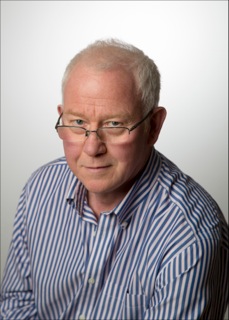
Every week, we publish interviews of the guests for the #Babishai2016 Poetry Festival, scheduled from 24 to 26 August in Kampala. Here’s Graham Mort, Professor of Transcultural Literature at Lancaster University , author of more than nine volumes of poetry and who can’t wait to return to Uganda.


Graham Mort  (Courtesy photo)


1.      You have nine volumes of poetry to your name. Were there significant changes in your poetry after the first three volumes?
Well, I think it’s been more a process of evolution rather than rapid change. The first three collections explored some of the things I was most interested in – landscape and places, politics, violence, conflict, work, forms of social injustice. I think that my poems became more complicated after that period, so I’d try to build more themes into the same poem. I don’t like poems that preach, so my other preoccupation was trying to make poems that got people to think, but didn’t tell them what to think. So for me the personal and the political have always worked together, often with the underpinning of a very distinct location. The more I’ve travelled, the older I’ve become, the more those locations have opened out new dimensions in the poems.But one constant has been writing about birds in both my poems and my prose. One of my richest experiences of Africa was visiting lake Mburo in Western Uganda – the birdlife there is amazing and I found that very affecting. But even in Kampala there are birds everywhere, the most I’ve seen in any city in the world. So they’re a constant thread through my work that’s been there from the beginning, though they’re never really just about themselves. I guess they’re emblems of flight, freedom, the ability to soar above everything and look down in a predatory way, like writers.


Students at the 2011 Lancaster University Summer school where Graham Mort teaches.


2.      Last year you visited Vietnam to talk about poetry. Briefly describe the objectives and outcome of that visit.
This was a visit I made to the Asia Pacific Poetry Festival in Hanoi. It was large event mounted by the Vietnam Writers’ Association that brought together about 100 poets from all over the world – many from current or former communist bloc countries such as Cuba, Poland, Czechoslovakia, China, and Russia. But also from Indonesia, the US and – of course, me from the UK.  Like many people of my generation, I grew up with the Vietnam War raging on the news media, so that was a formative time in terms of our political beliefs and affiliations. It was very moving to see this beautiful country, still in recovery, and to meet such a graceful people who had managed to defeat the military might of the US through sheer persistence and self-belief. It was also very moving to meet American veterans who had fought in Vietnam through conscription, but had found the courage to go back there and meet Vietnamese writers, who have since befriended them.  The aim of the festival was to create insight into Vietnamese culture and poetry and it certainly did that in a powerful and long-lasting way.

2015 Writing for Liberty Conference at Lancaster University
3.      In 2002 and 2003 when you launched the Crossing Boarders Writing Mentorship scheme in Sub-Saharan Africa. What were the major changes you saw in writing amongst the writers of the program?

I’d been writer–in-residence at Makerere University for the British Council in 2001 and I fell for Uganda and its people almost from the moment I stepped from the plane. There I was in Uganda for the first time with no one to meet me, this shy Englishman, yet it was just extraordinary. During my visit I met many young writers whose work was influenced by rather archaic models of poetry and, at that time, there were virtually no Ugandan writers on the school curriculum. So it felt as if writers working in English had a very outdated sense of contemporary writing in English. When I built a team of mentors in the UK, I wanted to find professionals writers who also represented the cultural diversity of the UK. When they came together with young Ugandan writers – and later with those across sub-Saharan Africa – I think there was a recognition that we were working together in a common purpose of cultural exchange and writing development, not in a hierarchical relationship as teachers and students. In fact, we were very were keen to avoid that perception. Uganda was conspicuous because of the way that young writers gained confidence in their work and in their own voices. They began to publish their writing and to win significant literary prizes. But this wasn’t just one-way traffic, the writers who worked as mentors from the UK all visited African countries and that had a profound affect on many of them.

4.      Your session at the #Babishai2016 Poetry Festival is called Working with Words. Who is your target and what can participants expect?
I haven’t worked out the fine details of my workshop yet, but I want to get down to the idea that the work of poets is to build poems in the way an engineer builds a complicated structure, or the way a composer harmonises a piece of music but includes dissonant elements. It’s important to understand the nature of the materials we’re using: the extraordinary energy and potential of language, the interrelatedness and inherent ambiguity of words. The American poet, Robert Lowell said that a poem doesn’t just describe an event: it is an event. By that he meant it was an event brought about by language that happens in the realm of language. The ability to speak about how we think, feel and experience the world is uniquely human, it expresses our individuality and difference, but also the solidarity that takes place between humans when we communicate. I’m hoping to provide a workshop for anyone interested in the ability of language to describe this world whilst inventing other ones. Oh, and I should say that a sense of humour will be essential!

5.      Why was it important for you to accept our invitation?
When I first came to Uganda in 2001 I was received with warmth and generosity by everyone I met. In a way this helped me to understand things about myself – a middle-aged writer from the northwest of England caught in the vortex of a Ugandan general election, with all the tensions of that time sparking around me. I even played cricket at Lugogo stadium for a local team. So here I was, out of my comfort zone, but I was also thinking about home and writing about it, making connections. I’ve been an educator all my life, so it was natural to want to set up a new project,to respond to thetrust and generosity I’d received in some way. That’s why I started Crossing Borders and then the Radiophonics project that led to the Under the Sun broadcasts by Ugandan and Nigerian writers. But I have a much more selfish reasons, which is that I love being in Uganda and miss it when I’ve been away too long! I’ve been back to work with the women writers at FEMRITE – who were instrumental in opening up the writing scene in Kampala for me when Goretti Kyomuhendo was in charge. Kampala is a rapidly changing city and that includes its literary life. I was really honoured to be asked onto the Babishai Niwe board and then to be invited to the festival. I want to see what’s going on now, in 2016 – and, of course, to meet up with some old friends. I’m going to stay at the Guest House at Makerere, drink a Bell lager or two, and tune into the political discussions on the terrace as the city lights up at night.

6.      What are the two main subjects you find yourself constantly writing about?
That’s a really tricky question when it comes to poetry.  It seems an obvious question but writers nearly always take evasive action when they’re asked what their poems are about, because poems are always reaching beyond language to the ineffable. I suppose ‘love’ is an obvious answer to that, the way it endures and is redefined as one gets older. Louis Armstrong said that without love a musician couldn’t play. But that kind of love is not just for another individual, it’s the sense of importance we attach to life and the vitality of language. The other constant dimension for me is definitely that sense of exploring location: not just the present moment of a place, but history and future, too. I guess writing about places also involves the feeling of being out of place. Maybe that’s how we understand ourselves best, when we’re taken out of our natural element and have to try to breathe somewhere else. It’s also a tricky question, because poems themselves try to evade obvious subject matter or to subvert it. Back to Robert Lowell. It's not so much that a poem is about its subject, it is its subject. Each poem is really complex and individual: we don’t say that people are about themselves; they are themselves.

7.      How do you feel towards art for social change?
It’s one of the main reasons that I return to Africa and why I’ve been working in Kurdistan recently. African writers, in particular, have always seemed to believe that writing can redress social and political injustice. It’s no coincidence that some of the towering moral figures in Africa are writers rather than politicians. I think writers also know that you have to forgive in order to understand, in order to create a poem or a narrative that is more than a judgment, that can synthesise a new vision for the future. I think Nelson Mandela was a great politician because he understood that kind of forgiveness and reconciliation. In my own work – especially in prose fiction – this is something that I’ve explored, the way we need to confront injustice, but can’t merely judge. Injustice is its own judgment when exposed. My last book of stories, Terroir, is largely concerned with forms of violence against the individual. It’s true of some of my poems, too, but poems also need to celebrate life in a positive way. Sometime it feels that I permit myself those more joyful events, those glimpses of irony, humour and beauty, the ways that poems remake experience and show us things just beyond our understanding.So social change, realisation, insight, can be brought about in many ways, including – or especially - by an artist being true to themselves rather than to a political agenda. That takes me back to those bird poems and how mysterious, miraculous and moving things we almost take for granted can be when they’re remade through words.

We look forward to hosting you. Any concluding remarks?
Just that I’m so much looking forward to coming back. When I step off the plane I’ll catch that incredible scent in the air, the sense of tumult and excitement that is Entebbe, Kampala, Uganda.Then black kites and marabou storks soaring above as we drive towards the city centre.There are lots of memories in Uganda for me, so there’s always a little sadness, something a little wistful about going back to a place that has been important in one’s past. I’ll be thinking about homeand writing, bridging that space between continents with words. Then, after the festival, I’llbe flying to Johannesburg where I have work to do and some more old friends to meet up with!

In partnership with Praxis Magazine, we’ll be publishing weekly interviews of the guests for the #Babishai2016 Poetry festival.
Tel: +256 751 703226

Twitter: @BNPoetryAward

Sunday, January 31, 2016

#BABISHAI@STORYZETU 2016 TWITTER COMPETITION


 SUBMIT TO THE BABISHAI@STORYZETU 2016 TWITTER COMPETITION

Below are the Competition Rules: Submit in only one category, 1.2.3. or 4.

1. Compose a tweet based on a response to a poet who emerged second in a major poetry       competition

2. Compose a tweet based on a response to a poet whose poem you did not accept in your major poetry magazine

3   Compose a tweet in response to emerging second in a major poetry magazine.

4.  Compose a tweet in response to your poem not being accepted by a major poetry magazine.

5.  The competition runs from 1st February to 4 March 2016.

6.  Send the tweets to @BNPoetryAward and @Storyzetu with the hashtag, #BabishaiSZ
7.  The winner of each category will be announced on 10th March 2016, after which the public will vote the eventual winner. The public voting will open after midnight on 9th March 2016.

8.  The winner will be announced on Friday March 19th 2016 by Storyzetu, in celebration of World Poetry Day.

9.  The winners for each category will be voted on by the public until a winner is announced.

10. The judges are the fabulous team @Storyzetu and the public.

11. The winner will win free travel, accommodation and all meals covered during the #Babishai2016 Poetry Festival in Kampala, from 24-26 August. All participants  
    must be residing in Nairobi during the period of the festival and eligible to travel to Uganda from 24-26 August 2016

 For more details, email festival@babishainiwe.com or call +256 751 703226.


Monday, October 19, 2015

SPECIAL CALL FOR UGANDAN WOMEN POETS-#BABISHAI2016 POETRY FESTIVAL


Are you a Ugandan female poet brimming with poetry and verse? Are you ready to take your poetry from the page to the stage? Then join us for the #Babishai2016 Poetry Festival from 24-26 August 2016, under the theme, Abundance: Poetry From Contemporary Africa.

Paula Biraaro receiving her prize in 2012. Photo by Buyondo


We invite you to showcase your work by:-
Ø  Launching your poetry collection
Ø  Performing your poems
Ø  Attending a poetry master class or monologue
Ø  Participating in a poetry dialogue or silent poetry or
Ø  Showcasing children's poetry or poetography
We accept poetry in Lumasaaba, Luo, Luganda, Runyankore and any other Ugandan language.
During the three-day festival, we will also have new and older Ugandan and international poets and artistes performing, holding open mics and children’s poetry sessions. 

Eligibility:-
If you are a Ugandan female poet, send us the following:-
v  A one-page summary of what you propose to showcase (as MS Word attachment)
v  A 500-word bio (as MS Word attachment)
v  A recent passport photograph (in jpeg or GIFF)
v  Links to your previous work
All works should be sent to babishainiwe@babishainiwe.com
DEADLINE: Monday, 8 February 2016.
Successful poets will be notified on Monday, 4 April 2016
We look forward to CELEBRATING #Babishai2016 with you
For inquiries, contact: 

Harriet Anena: +256781412975 

Prior to the festival, from June 10th to 13th 2016, we will hold a poetry session at The Foothills of The Mountains of The Moon. Find details here: http://bnpoetryaward.blogspot.ug/2015/10/babishai-poetry-on-mountain-10-to-13.html 

Friday, October 16, 2015

#BABISHAI2016 CELEBRATES #LAWINO@50, 24-26 AUGUST 2016


#BABISHAI2016    #LAWINO@5O
 Are you filled with the potency, cultural significance and shrewdness of Okot p’ Bitek’s Song of Lawino? Then join us for the #Babishai2016 Poetry Festival from 24-26 August 2016 in Kampala. This is an open call.


Courtesy photo

Under the special theme, #LAWINO@50, we invite you to showcase your work by:-
Ø  Performing your poems on the theme of @Lawino@50
Ø  Attending ding or holding a poetry master class or monologue
Ø  Participating in a poetry dialogue or silent poetry or
Ø  Showcasing children's poetry or poetography
--  Presenting a critical paper for discussion
We accept poetry in Acholi, Langi, Alur, Lumasaaba, Luganda, Runyankore and any language, you please. We want to hear from you and celebrate with you.

During the three-day festival, we will also have new and older Ugandan and international poets and artistes performing, holding open mics and children’s poetry sessions. 

Eligibility
It's an open call.
v  A one-page summary of what you propose to showcase (as MS Word attachment)
v  A 500-word bio (as MS Word attachment)
v  A recent passport photograph (in jpeg or GIFF)
v  Links to your previous work
All works and inquiries should be sent to babishainiwe@babishainiwe.com
DEADLINE: Monday, 8 February 2016.
Successful poets will be notified on Monday, 4 April 2016

Prior to the festival,  we will hold a poetry session at The Foothills of The Mountains of The Moon from June 10th to 13th 2016. Find details here: http://bnpoetryaward.blogspot.ug/2015/10/babishai-poetry-on-mountain-10-to-13.html 

We look forward to CELEBRATING #Babishai2016 with you!

Monday, February 23, 2015

Launching Poetricks at Kampala Parents School-20th February 2015

On 20th February, we'll officially launched Poetricks at Kampala Parents School. Poetricks is an adventure toolkit for children who read and write poetry.
It is an adventure guide with puzzles, games, building blocks and more, all in an attempt to introduce poetry to children from the age of four to eleven. The book can very well be used for older children and adults. It is a maze, a way of filling in that empty feeling when we feel defeated by poetry.This is the start of  a continent-wide launch of the toolkit. Other launched will take place in each of the East African countries later in the year.

We have a target to sell thousands of copies annually. Once a child has a hold of it, the rest will ignite with need and passion.


Launching

#LOVEROMANCENEGIBENDERAKO MU KAMPALA -READING AND LOVE 13TH FEBRUARY 2015

#loveromancen’ebigenderakomuKampala


Were you there for the Babishai Niwe Poetry Day Time Series? Well, on 13th February, Valentine’s eve, if we may add, #Loveromancen’ebigendeerakomuKampala happened. Love, Romance and the things that follow in Kampala. The first poetry reading event of its kind, held from 10:30am and 12:30pm at 32° East | Ugandan Arts Trust.
25 of us settled down to a good session on poetry, based on exactly that, Love doveyness of romance in Kampala. It was difficult to know how the session would run. There were copies of poetry books on sale, A Nation in Labour and A Thousand Voices Rising, delicious chocolate and vanilla Wordy Cakes, roses to pick from and a sweet-smelling aroma of love. Paul Kisakye, owner of Wordy Cakes, rendered us helpless with his poem, Missing You,
Missing You
missing you
like a terminal disease
that one endures
but can't get used to

 first published here: http://paulkisakye.blogspot.com/2012/05/missing-you.html
Roshan Karmali, moderator and host of Poetry in session revealed her forthcoming collection, one we’re all looking forward to, a collection which unfolds in two parts, Angels and Demons. Rosh poetically submitted  us into another spiritual experience. For her, the entire reading was such a refreshing experience that she felt she was with long-lost friends at a brunch. How’s that for poetry.
Farida Bagallaliwo read one of Derek Walcott’s famous love poems. Her own interpretation, well portrayed through the melody in the recital brought us into an even deeper surrounding of #loveromancen’bigenderako. As an activist, Farida was particularly pleased that the event began and ended on time, as advertised.
The reading, supported by Poetry in Session, Femrite and 32° East | Ugandan Arts Trust was warming up at this point and there were still quite a number of poets to go. Joel Nevender, blogger and poet, read a parody, of 1 Corinthians 13, the love chapter in the Holy Bible. His rendition was entitled, 1 Valentine’s 13. This also highlights unrealistic views of love and romance on Valentine’s. This changed the narrative with symbols of the absurdities of Kampala City, most of which we laud, amongst them, the recent sex-tape scandals. His two other poems were, The Ones that Don’t get caught and Daisy. The Ones That Don't Get Caught talks about the hypocrisy of society as regards sexual immorality.
Daisy talks about a dream girl that will always be a dream, never a reality.

Caesar Obong, a poet from Northern Uganda, led the readers into a mystical and narrative view of lust and erotica, including the landscapes of love and society amongst various social groups. Roxanna Aliba, a love poet, read from her forthcoming collection which will be released mid this year. Hers is one we should definitely aspire towards.
Half-way the reading we held a mini-launch of Harriet Anena’s A Nation of Labour, a selection of poetry about the irrationality of governance in Kampala, as well as unimaginable pictures of sex at an entirely new scale. Her concise messages remain imprinted and it was a pleasure to have her. Harriet’s book inspired another member to write her own collection. Her poems, Hemline cop, V-Day and We are on heat. Hemline cop is an excellent version of the hypocrisy of the state of governance in Uganda. Further, in Anena’s words:
“The event was a great start in the right poetic direction and I look forward to seeing similar events organized for not just Valentine’s Day but other key days on the Calendar.”
Christine Ssempebwa is a poet whose truths and convictions lie in the verse. Quite new to the poetry scene, she proved herself wrong by calling herself a non-poet. The rhythm and message were everything poetic.
Edith Nakku, a writer and member of the weekly readers-writers club, said of the event said she enjoyed the event and this is what she said,
“I was able to meet people of like and different mind and be inspired by their words, to hear truth spoken in new beautiful ways. Amazing. The time of the meeting was great. No hurry, no hassle.”
Roshan Karmali said,
“It was an insight into loving and living in Kampala from the sex tape to the heartbreak and everything inbetween and a reflection of Love from multiple angles.”
What is love and romance without music? Bosco, a regular at Poetry in session, got out his guitar and sang an all time favourite, How does it feel to be the one that I love? It’s a soft and deep masterpiece, whose lyrics tug at a listener’s heart-strings.
Susanne Aniku, jazz musician and singer brought down the house with two songs. One was written by famous composer George Gershwin in the late 1920s, entitled The Man I Love. It is about a woman longing and dreaming about the man she loves. The second, Susanne’s own song, called Thank you, is a song of gratitude to someone that rescued her when she was down. Both songs will appear in her forthcoming jazz album. Her own poem, Your eyes also reflects her own ability to be soul deep and unapologetically in touch with her emotions.
Heritage Ddamba, a spoken word performer, emotionally took us on a roller-coaster of  a love target in a man’s life. Beverley Nambozo, BN Poetry Foundation founder,  ended the day with her poem, Dear Doctor. A poem about the unsafe spaces of love in Pentecostal churches, of a strong Christian woman, affected by HIV by her god-fearing husband, and having to show gratitude for all he’s done for her.
Many thanks to Moses Serugo for Youtube videos, Dilman Dila for photographs, Fred Batale for the organization, Lamaro Jennifer for the administrative work and to the many that came. And for the twenty or so who thought it was a night-time event, we’ll see what we can do about that next time. Babishai Niwe Poetry Foundation is committed to more poetry and more of you.
#BNP2015
#LOVEROMANCEN’EBIGENDERKOMUKAMPALA
Below are a few videos from the event, done by Moses Serugo and in case you missed it, Dr. Okaka Dokotum highlighted Ugandan women in the arts, raising the writing flag high.


https://www.youtube.com/watch?v=iAlyseIIHdM 
https://www.youtube.com/watch?v=C0J5IxNf4Cs&spfreload=10 
https://www.youtube.com/watch?v=NK4muZsRMFU 
https://www.youtube.com/watch?v=3fcjpk8UlIw 
https://www.youtube.com/watch?v=9aQoo3rnNM0&feature=youtu.be  

Note: BN Poetry Award submissions last year reached 1,500. If you want to participate, submit your poem. Follow the guidelines on our website www.bnpoetryaward.co.ug

Thursday, February 12, 2015

PRESS RELEASE: POETRYGANZA-JANUARY TO JANUARY


PRESS RELEASE- 11 FEBRUARY 2015
A YEAR OF POETRYGANZA.


On behalf of the board of the BN Poetry Foundation, I am pleased to share some of our literary and creative poetry events in the next few weeks. We invite you to be a part. The Babishai Niwe (BN) Poetry Foundation is an establishment that coordinates annual poetry competitions for African poets, publishers work of African poets, organizes literary festivals and uses a unique toolkit called Poetricks, to make poetry possible for children.
We invite you for our reading on Friday 13th February 2015 for a reading based on the theme, Love, Romance nebigenderako mu Kampala. We expect poems, spoken word and stories on the issues of Love, specific to Kampala City. It will take place from 10:30am to 12:30pm at 32° East | Ugandan Arts Trust in Kansanga, opposite Bank of Baroda. On that day, we’ll also sell what reviewers have termed the most dynamic anthology of African poetry to date; A Thousand Voices Rising, we’ll hold a mini launch of A Nation in Labour, a poetry collection by Harriet Anena and in partnership with Poetry-in-session, give the participants an early Valentine’s surprise.

From 15 January to 15 May, we’ll be receiving submissions for the BN Poetry Award. The details are on the website at www.bnpoetryaward.co.ug. Our judges this year are Antjie Krog is a poet, writer, journalist and Extraordinary professor at the University of the Western Cape. She has published twelve volumes of poetry in Afrikaans and three non-fiction books in English:Country of my Skull, on the South African Truth and Reconciliation Commission; A Change of Tongue about the transformation in South Africa after ten years and recently Begging to be Black about the different ethical frameworks operating in the country’s democracy. Her works have been translated into English, Dutch, Italian, French, Spanish, Swedish, Serbian and Arabic.

Krog has been awarded most of the prestigious South African awards for non-fiction and poetry in both Afrikaans and English. International recognition came through the award of the Hiroshima Foundation for Peace and Culture (2000); Open Society Prize (2006) from the Central European University (previous winners Jürgen Habermas and Vaclav Havel);Research fellowship at Wissenschaftskolleg zu Berlin 2007/2008 and an Honorary Doctorate from the Tavistock Clinic of the University of East London UK.
Mildred Barya:
Mildred Kiconco Barya, a Ugandan doctorate fellow at The University of Denver. She holds a Masters Degree in Creative Writing from Syracuse University and a Masters Degree in Organisational Psychology from Makerere University.

She is the author of three award-winning poetry collections, namely:-
Give Me Room to Move My Feet, published in 2009 by Amalion Press in Senegal, The Price of Memory after the Tsunami, published by Mallory Publishers in UK and Men love Chocolates But They Don’t Say, self-published collection in 2002. Mildred serves on the advisory board of African Writers Trust where she is also a founding member. She is devoted to social change through creative works and blogs regularly at mildredbarya.com.

Richard Ali:
Richard Ali is a lawyer, author and poet born in Kano, Nigeria. Author of the warmly received 2012 novel, City of Memories, Richard is also Editor-in-Chief of the Sentinel Nigeria Magazine and was a runner-up at the 2008 John la Rose Short Story Competition. He edits the quarterly Sentinel Nigeria Magazine and serves as Publicity Secretary [North] on the Association of Nigerian Authors. Richard completed a 6-week Residency at the Ebedi Writers Residency Program in 2012, attended the Chimamanda Adichie-led Farafina Workshop in 2012 and was a Guest at the 2013 Ake Book and Arts Festival, Abeokuta. He lives in Abuja where he practices law and runs the northern office of Parrésia Publishers Ltd where he serves as Chief Operating Officer. He is unmarried and enjoys chess, reading and travelling. He is working on his debut collection of poems, The Divan.

In March, we’ll be holding a mini poetry festival in Kabale. This coincides with the Kabale University Language Day. We’ll hold readings, share the stage with the students in spoken word and donate books towards their library.

In May, we head to Nakuru with a delegation of poets for the inaugural Nakuru based Storymoja Festival. The BN Poetry Foundation sent the first ever Ugandan poets to the Storymoja Festival in 2012 and the partnership has grown ever since.

In July, we will announce the shortlisted poets of the BN Poetry Award and in August, hold a poetry festival in Kampala, as we announce the 2015 winner.

September, together with Bayimba Foundation, we’ll launch the first ever poetry anthology on the theme of Kampala City, during the Bayimba Festival.
We look forward to sharing more this Friday at the Love, Romance reading.

Beverley Nambozo
Founder, BN Poetry Foundation
Tel: +256 751 703226


Friday, January 23, 2015

RUKUTURA/RED-POEM BY PATIENCE NITUMWESIGA,

RUTUKURA

kammyasyamyasya
kammurinkanya
ka'goondagoonda
keiruka.

kammurusyamurusya
ka'yetoroora
ka'shwarashwara
keiruka.

keirukanga
ka'muriinkanya
Ka'barabaruka
Keiruka.

Tigwaaba mugyera, bakanaabiiremu
Tigwaaba murabyo, bakaagutiinire
Tigwaaba muriro, bakaagwotsire
Tizaaba na'nsiriira, bakaazakize.

Kaaba rutukura
Kaaza burihamwe
Keijuza empaanga
Keiruka.

Babeiha ngu nikabi
ngu keine n'oburofa
Beiba ebyaako byoona
ngu tikeine buganzi
Baarya ebyokurya byaako
ngu nikagura zingahi
Bakireeba kaahwayo
ngu nikeenda obuyambi

Haza kataraaka
Katyo kaaguma
Kaacura kaaborooga
Kwonka kaahunama
Keiruka.

Ka'shondashonda
Ka'tonzyatonzya
Kashataguruka
Kaayebaziira
Keiruka

Ka'toonyatoonya
Kayetereeza
Kaayecureeza
Kaabaha amagara
Keiruka
Enfeerwa yaako bakigishumbusha
Ngu eshi nikatungwa ebyabusha

Patience Nitumwesiga
Uganda

RED

It twinkles
It glitters
It's frail
It flows.

It flashes
It wanders
It blushes
It flows

It runs
It glistens
It sparkles
It flows

It isn't a river, they would bathe in it
It isn't lightning, they would be scared
It isn't fire, they would sit by it
It isn't sparks, they would light them up

It is red
It is everywhere
It fills up valleys
It flows

They lie that it's ugly
and say it is unclean
They rob all it has
and say it has no honor
They eat its food
and ask for its price
And when it's broken
They say it needs help

O it scatters
Dear me, it endures
It screams and yells
Yet it remains silent
It flows

It picks all it can
It grieves
It explodes
It weaves its pieces together
It flows

It drips
It gathers its grip
It humbles itself
It gives them life
It flows.

when its loss is compensated
they say it thrives on favors.

Patience Nitumwesiga
Uganda


Thursday, January 22, 2015

Better At Dawn by Barbara Oketta


Better at dawn

When all is silent and the rhythm of the night takes control
And the whisper of your hoarse voice penetrates my being
And everything else does not matter
I say, better at dawn.
When the Chirrup of the birds
Is as distant as a dream,
And your embrace as cajoling as a baby’s stare.
And my hunger for you as desperate as a sneeze,
I say, better at dawn,
When the children are dead asleep
And the maid’s snore fills the house
And the neighbors’ dog
Provides the distraction-
Better at dawn.
Not in the morning when the cups and saucers clatter
And the fear of the school bus
As alive as dawn,
Or lunch time, when the sounds of the keyboard fill the space
As the boss shouts ‘today is the dead-line’
And there is hardly time to sing,
Or in the evening when the family is bustling
And the 9 o’clock news fills the T.V room
As the children run and unsettle everything
Knowing that family time is an unbroken tradition,
I say better at dawn
When the world is frozen
And the rhythm of our bodies much sweeter,
For then, only at dawn
Can I dance to our music?  

Barbara Oketta
Uganda


Published in A Thousand Voices Rising. Buy a copy in Kampala at 20,000/- during the 13t Februaru reading and get wordy cakes for free.

Monday, April 21, 2014

BEVERLEY NAMBOZO INTERVIEW IN GLOBAL PRESS JOURNAL

KAMPALA, UGANDA – Award-winning Ugandan poet Beverley Nambozo Nsengiyunva is dedicated to preserving and advancing Africa’s tradition of oral expression. In addition to writing her own poems, she established the BN Poetry Award to encourage African poets to emerge and flourish.

In an interview with Global Press Journal, Nambozo talks about how poetry empowers readers to transcend suffering, to deepen their capacity to love and to spark social change.

Apophia Agiresaasi: I understand you became interested in poetry early in life. Was there a poet in your family, community or in Uganda who inspired you to start writing poems?

Beverley Nambozo Nsengiyunva: I was actually a child when I became interested in poetry, or, to be more specific, interested in the musicality of words and the rhythmic ability of prose. There is no poet in my family, but my father was very artistic, being a diplomat who was very well-traveled, and he translated his explorations into the home, which influenced me. My mother and siblings also have creative gifts in various fields.

The schools I attended supported writing and reciting during assembly, in class and even in the dormitories. I often composed raps or poems for my dormitory or class and weaved them into dance routines.

Coincidentally, my husband too is an artist, and so are our children.

AA: Among the poems you have written, which one do you like the most and why?

BN: One of my favorite poems is “At The Graveyard,” first published in my chapbook collection, “Unjumping,” and also in The New Black Magazine. It is about my father’s passing and how his immediate family was affected by his death and started to act so lovingly towards his memories in the hope that he would be able to cherish and take part in their ritual of loss and love.

I read it because memory is what we have when people we love die, and we can re-create these memories to make the loss more bearable and to strengthen ourselves to live large and to love large while we are alive. The poem has taught me that love knows no bounds and the heart is disobedient to rules because, in my own life, I have loved and continue to love in the true belief that light trumps darkness.

AA: Your poetry speaks about a range of issues, from sexual harassment to motherhood. Do you see your poetry as a way of promoting social change?

BN: For me, that is the epitome of writing. If my poetry can inspire, sow a seed, change a thought, and point an idea towards social change, then I will say that I have lived and have left a legacy to my children. Poetry is sacred, and I still believe that it is the highest form of literary art. I highly respect all other forms of literature ­­‒ prose, short stories, plays and novels ‒ but poetry is loudest in its stillness and silence. Poetry takes us to our primal world and our highest intellectual form through its creation and understanding and impact.

I desire my poetry to create discourse that will elevate female prisoners from the bedrooms of their woes, from the homes of their estrangement where their creative expressions have been strangled by traditions that disallow them to speak boldly before their grandfathers and uncles. I want my poetry to teach women to dance until their belly buttons form into lips of praise.

“At the graveyard I sit on my father’s lap. Where we can talk. Of what could have been but was not. Here he has many friends, Even his mother-in-law brings him flowers. Now I understand why he has to write. It keeps him alive. We saved him by killing him. Because now he writes. He recited a poem for me And my mother discovered my frozen tears on my father’s stone ”

AA: Do you write your poetry for a particular audience?

BN: I usually have a handful of people in mind, but after I have performed it or it has been published, I come to the daunting realization that my audiences are as visible as my nose and as obscure as a revolution. They are the invisible power that makes me write. The more I write, the more I don’t know my audience. It is usually when I am not writing that I am conscious of an audience that I imagine is belittling my creative work.

AA: You have mentioned previously that Uganda’s culture is founded on oral expression and that poetry is a way of preserving morals, history and values. Why do you think poetry is a powerful form of oral expression to preserve culture in Uganda?

BN: The reason that poetry is a powerful form of oral expression in preserving culture in Uganda is because our lifestyles are created through the things we observe and the manner in which we speak. As we tell stories, share news and gossip, we are creating a Uganda that we live in, that we have lived in, and that we desire to see. Stories and songs are expressive ways of sharing our deepest knowledge and truths based on morals, celebrations of thanksgiving, mourning [the] death of a loved one and making announcements. It is these oral gifts that bring communities together, and we should never lose that.

We should never stop speaking of what we are because if we do, the mouth grabbers will steal our speeches and turn them into their own. I believe that oral forms, if they are strengthened, should blend and become hybrids. Let our words drift into other lands so that they can learn and love us, and let our words mingle with people from far away so that they can blend with theirs and become richer.

AA: You have said that poetry is essential to bind Ugandans together. Do you write poems in local languages to preserve the culture and promote unity among Ugandans?

BN: I write quite a lot of poetry in Luganda, which is my mother’s language. My father was a Mugisu. And traditionally, I come from Sironko in eastern Uganda. I desire to become a perfect wordsmith in Lumasaaba as well. In addition, I am learning to speak Runyankore and Kiswahili to make my poetry richer than it is through the fusion of local languages, whose abilities supersede certain phrases in the English language.

AA: How has poetry defined your life?

BN: The truth is, poetry has been a lifesaver for me. Yes. I have gone through ripples and storms through my interactions with people, and it is only poetry that has brought me calmness as I wallow and weep. Poetry absorbs the tears and turns my self-pity into sweetness. While people take alcohol to rid themselves of misery, I write or read.

The Bible is very poetic, especially the story of Hannah, who was mocked by her co-wife after failure to give birth, but when she did, hers was a child of promise. Her song of thanksgiving is one of my favorite spiritual poems.

We have all been in situations where we are treated so unfairly even though we have loved so dearly. And then the promise we have been waiting for comes its way. We are so filled with gratitude that we can’t even gloat but just rejoice.

AA: You started the BN Poetry Award to promote the genre in Uganda. What has been your most rewarding experience since you started the award?

BN: Being part of a growing revolution. Watching people like Lillian Aujo flourish into award-winning poets. Witnessing strong revolutionary voices like Sophie Alal and Sanyu Kisaka. Being part of a young poet’s dream like Susan Piwang and Rashida Namulondo.

I have also been extremely blessed to find firm friends in the poetry fraternity: well-wishers, literary organizations and international writers who want to be a part of BN. It’s incredible.

AA: What can other poets do to encourage other people to read and write poetry?

BN: We can invite them to our readings; organize reading clubs of poetry; conduct poetry workshops and poetry camps to instill a disciplined and persevering spirit of a poet who reads a lot; and supply them with all types of creative literature.

AA: Where do you see the Ugandan female poet 10 years from now?

BN: That is a lofty task. I hope that my vision is too limited for that. I hope that no one is able to see the Ugandan female poet in 10 years because they will be in a universe that has not yet been created. In 10 years, I am sure when you conduct a similar interview, you will agree.

- See more at: http://www.globalpressjournal.com/africa/uganda/ugandan-poet-preserves-oral-expression-and#sthash.anj8fsXm.dpuf