Sunday, April 3, 2016

#BABISHAI2016 POETRY FESTIVAL GUEST-OPRAH OYUGI FROM KENYA

Oprah Oyugi won the #BabishaiSZ Twitter competition run by Storyzetu in Nairobi. Her prize is a fully paid trip to the #Babishai2016 Poetry Festival, 24-26 August in Kampala. We're grateful to Praxis Magazine for publishing these interviews.

Courtesy photo


1.       Oprah, we know you’re a film-maker and a writer. Which role came first?
I  knew I wanted to pursue filmmaking a few months out of high school and didn’t think about writing as a career till after I had finished my film course. However, I have written and have been writing since I was 7.
2.       In February, Storyzetu ran a one-month long Twitter competition for residents of Nairobi, which you won and now will be attending the #Babishai2016 Poetry Festival.  What do you expect from a poetry festival?
Outrageously amazing poetry and poets

3.       What is the most remarkable deed you have done as a film-maker?
I’m only starting out and don’t feel like I’ve quite earned my stamp as one. But I’ve been selfish of my life and been very clear that I will follow Filmmaking and writing as a career in Kenya and Africa, no matter what… I hope many Kenyans and Africans can and will do the same. We have amazing stories hidden in our people. These are the stories that will liberate us from neo-colonialism and make us look inwards, love ourselves and grow. If I have inspired a fellow Kenyan/ African to do the same, I hope that can count as a good deed.
4.       Can you name some of your favourite African film-makers and why?
My favourite African films were directed by foreigners. We have to change this. Still, these guys stood out to me and I don’t think it’s coincidence most of them happen to be Writers/Directors

●        Tosh Gitonga – Nairobi Half Life. If you haven’t watched it, you must. It’s pretty self explanatory.
●        Lupita Nyong’o – I believe that she is where she is today because of her hard work, tenacity, relentlessness and determination. I reckon that’s what makes or breaks filmmakers. These are traits I’m working on having.
●        Donald Mugisha – The Boda Boda Thieves. I loved this film.
●        Yared Zeleke – Lamb : The heart, simplicity and empathy of this story just got me. I walked out of the cinema with a fire to make films after watching this one
●        Gared Hood – Tsotsi : This was such a raw and gritty film that was so true to the setting and experience of many African slums. I could see and hear the people of Dandora, Kibera and Githurai  in this film.
●      Abderrahmane Sissako  – Timbuktu. This one just shut me up. The film is paced in a way that makes you take in every action or inaction. The diverse cultures represented in the film are done in such truth and honesty. My films will definitely be influenced by his work.

5.       Are you doing what you dreamt of as a child?
 Well, there’s 2 answers that question. Always wanted to be a pilot – still have my sights on it. But since I was very young, I’ve always made things up in my mind and written. I was always that girl who had her composition read at the front of the class. My mom really wanted to publish them. I wouldn’t say I dreamt of it but I was a dreamer. I guess, some things just manifest. Go figure
6.       The Babishai Poetry festival theme is Abundance: Poetry from Contemporary Africa. What do you think this means?
Surplus, availability or lack thereof of what we as humans (Africans) want, need and desire.

7.       What is the best diet for poets, in your opinion?
Shitloads of stories, poems (reading material basically), an observant mind, an unquenchable desire to understand the actions of others and an environment bustling with human activity.

8.       Which African actors do you desire to have in any of your films?
Soo many but, off the top of my head:
●        Paul Ogola – Nairobi Half Life/Sense 8
●        Rachel Mwanza – War witch
●        Maina Olwenya – Nairobi Half Life
●        Timothy Njuguna – The Real Househelps of Kawangware
●        Hamisi Bazili – White Shadow
●        Nana Mensah – An African City
●        Susan Wanjiru – Something Necessary
●        Walter Lagat – Something Necessary


9.       Any parting remarks? No
Bio
Oprah is an upcoming filmmaker based in Nairobi, Kenya. She studied Creative Writing in Whitireia NZ and hopes to write stories and films that depict and look into the true lives of Kenyans and Africans. Her Short Play went through to the Wildcard finals in the Short + Sweet Festival in Sydney. She hopes to premiere one of her short films based on gangs in Kenyan universities in June this year.
Read more about her and check out her work on: www.oprahoyugi.com

 Thanks Oprah, see you in August.

babishainiwe@babishainiwe.com
Tel: +256 751 703226


Thursday, March 31, 2016

BABISHAI LAUNCHES QUARTERLY BARBEQUE NIGHTS

On Friday 18 March, to celebrate World Poetry Day, Babishai launched its quarterly Babishai Barbeque Nights at Blue Hummingbirds in Muyenga. Given the strength of spoken word events in Kampala like Poetry in session and Tontoma Poetry Jazz, there is a growing audience and a growing spoken word community which speaks into progress.


Preparing for the barbeque
Given the recent ripple effect of Presidential elections that arguably  crippled social media freedom for  a while and small businesses, events like these give an outlet for unhinged expressions, which are necessary for survival.
This night was held in the unique and breath-taking gardens of Blue Hummingbirds, where poets, musicians, word lovers and the corporates gathered to experience an  infusion of barbeque and poetry. The Body of Brian,with his melodious Humanoid, stunned the crowd. Mark Gordon,  slam poet, recited several poms amongst them, Rolex, published in Boda Boda Anthem.
The Body of Brian, performing Humanoid.
Israel Kalyango was probably the biggest surprise when he sang Lean on Me. Rather timid at first, his gifted voice rang throughout the night. One of our favourite comedians Daniel Omara, was able to wow us at every interval with his unforgettable jokes and gimmicks. you should hear the on about his surname.
Earlier that day, Babishai participated in the Song of Lawino 50th anniversary symposium, held at Makerere University. Packed to the brim with academics, students, schools and writers, Okot p’Bitek received a full honour that day.

Professor Taban lo Liyong and Beverley Nambozo Nsengiyunva at Makerere University.
During the Babishai Poetry Festival from  24-26 August in Kampala, we’ll be holding more celebrations of Song of Lawino @ 50.

Friday, March 11, 2016

LEKPELE NYAMALON FROM LIBERIA, BABISHAI 2016 POETRY FESTIVAL GUEST

 Each week, we interview our guests coming for the #Babishai2016 Poetry Festival scheduled for 24-26 August 2016 in Kampala. In partnership with Praxis magazine, we want to share the power of poetry. This week, it’s Lekpele Nyamalon from Liberia, award-winning poet, public speaker and author of recent poetry collection, ‘Yearnings of a Traveller.’

Courtesy photo


1.       Lekpele, you’re the founder of Africa’s Life, a non-profit organization that supports youth towards motivational speaking and life-skills. Does this have any bearing to your own childhood?
 It does. As a child, I was constantly thrilled by the lives of other successful people. Eachtime a guest was invited to speak to us at school, I looked forward to someday becoming like one of them, coming back in a similar capacity to motivate other young people.

2.       How supportive has Open Society of West Africa been to your poetry in Liberia?
Open Society Initiative of West Africa (OSIWA) did a tremendous job by exposing emerging poets like me to a larger platform of self belief. The experience on Goree Island, Senegal sponsored by OSIWA remains a treasured memory.


3.       How would you describe your debut collection, ‘Yearnings of a Traveller,’ in three words?
  Journey. Adventure. Homecoming.

4.       You won the 2015 World Poetry Day celebrations, organized by Young People Today in South Africa. Do you think older people are being marginalised in literary circles in Africa?
 I think the wave of literary and artistic expressions are taking a sweeping wave across the continent and a rude awakening is taking place.


5.       The theme for the Babishai 2016 Poetry Festival is Abundance: Poetry from Contemporary Africa. What does this mean to you?
This means that poetry has transcended the traditional approaches. Spoken word and direct forms of expressions that come from the soul are emerging genre of the art that must be accommodated nowadays.


6.       In June, Babishai will hold its inaugural Poetry on The Mountain and while there, launch a poetry collection on Mt. Rwenzori. How significant is this act of taking poetry to the mountain?
 It speaks of spending time with nature, the unspoken companions of poets and listening to them.

7.       What diet do you think is best for poets?
 I think a healthy diet with lots of water works.

8.       When you think of poetry in Uganda, what comes to mind immediately?
Adventure…

9.       Any parting remarks?
It has been a remarkable journey and I look forward to a unique blend of experiences from other poets from across Africa at the Babishai Poetry festival.

Thank you for your time.


For Babishai Poetry Festival details, email festival@babishainiwe.com or follow us on @BNPoetryAward

Monday, February 29, 2016

THE 2016 BABISHAIKU AND BABISHAI POETRY AWARDS


THE TWO BABISHAI 2016 POETRY AWARDS
CATEGORY 1-THE BABISHAIKU 2016 POETRY AWARD

Guidelines for submissions:

·         "We are looking forward to Africa themed haiku i.e. haiku about African sights and sounds. Haiku must contain clear images, settings and juxtaposition. Haiku must be concise and as brief as possible (though 17 syllable haiku are welcome).
·         In short, we encourage experimental haiku and but submissions should  be three- line haiku structure or form. Please note one single haiku cannot contain all the highlighted features above, and hence are to be used as mere guidelines."
·         It is open to ALL African poets (LIVING IN AFRICA), who will not have published a full-length collection of poetry by May 2016
·         Submissions should be original, in English. Submit using Times New Roman, single-spaced and size 12.
·          Send the three Haikus to bnpa2016@babishainiwe.com as a word attachment. Include the poem’s title on the poem but DO NOT include your name or contact details on the haiku  itself
·         If you submit in this category, you are not eligible to submit for the second category of the Babishai Poetry Award
·         The subject line should read, BABISHAIKU 2016
·         Include your name, email address, country or birth and country of permanent residence, telephone number and the titles of your poems in the body of the email
·         The submissions will be accepted from February 29th 2016 to May 22nd 2016
·         There is no theme, be as creative as possible
·         The long-list will be announced by July 2016
·         More details on the face book page, Babishai Niwe Poetry Foundation, on Twitter @BNPoetryAward and the website, www.babishainiwe.com
·         The top three winners will receive 150 USD each and participate in the 2016 Babishaiku mentorship programme
THE  JUDGES
The chief judge of the #Babishaiku 2016 Competition is:-

Adjei Agyei-Baah

Adjei Agyei-Baah is the co-founder of Africa Haiku Network and Poetry Foundation Ghana. He also doubles as the co-editor of “The Mamba”, the official haiku journal of Africa Haiku Network. He holds MA. TESL (Teaching English As A Second Language) and MBA in Strategic Management and Business Consulting from University of Ghana and Kwame Nkrumah University of Science and Technology School of Business respectively. He currently teaches English language and Literature in English as a part-timer at University of Ghana Distance Learning Center, Kumasi Campus and Ghana Baptist University College, Kumasi. Adjei is an inventor and a champion of “Afriku”  (African Haiku) – an avant-garde haiku type that focuses on the unique images, sounds and settings of Africa. He is a widely anthologized poet both at home and abroad, and have written and presented eulogies such as“Ashanti” and “In the Grey Hair of Soyinka”to King of Ashanti, OtumfuoOsei Tutu, and Wole Soyinka, the Nobel Prize laureate respectively. And his all-time favorite piece “For the Mountains”was selected by BBC to represent Ghana (in a poetry postcard project)in the last Commonwealth Games held at Glasgow, Scotland, 2014.
In the haiku circles, his works have appeared in reputable journals and literary websites such as Shamrock,Akita Haiku International Haiku Network, The Heron’s Nest, Cattails, Acorn, Frogpond, World Haiku Review, , A Hundred Gourds, Brass Bell Haiku Journal, Asahi Haikuist Network, Yay Words, Indian Haiku Kukai, Mainchini Daily,Presence, European Kukai Kai, Africa Haiku Network, Wild Plum, Prune Juice, Boston Poetry Magazines, Poetry Space-UK, Poetry Foundation Ghana, The Kalahari Review, Luminary Review etc.Besides, some of his published African haiku (which he pursues as a specialty) have received honorable mention from the desk of reputable editors and judges fromCattails, World Haiku Review and 4th Japan-Russia Haiku Contest, 2015 andwith others translated and recorded into music.
He is a member of Haiku Northwest, United States and United Haiku and Tanka Association (UHTS), United States and currently been mentoring young Africa poets who have interest in haiku with his African brotherandpartner, Emmanuel Jessie Kalusian with their new founded organization (Africa Haiku Network), with its core mission of promoting haiku across the Africa continent.
Adjei in his career as a teacher has acted as a poetry judge on many senior high school poetry and spoken word contests and his latest in similar role was the guest poet at Carpe Diem Haiku Kukaifor the month of August, 2015.Adjei is the Winner of Akita Chamber of Commerce and Industry President Award, 3rd Japan-Russia Haiku Contest, 2014 and look forward to more laurel in the haiku/ Afriku field which has become so addicted beyond redemption.Adjei launches his two maiden collections “Afriku “-Haiku & Senryu from Ghana (Red Moon Press, 2016) and Embers of Fireflies (Author House, 2016) this year.

**********************************************************


CATEGORY 2

BABISHAI 2016 POETRY AWARD SECOND CATEGORY

Guidelines for submissions:-
·         It is open to ALL African poets (living anywhere in the world), who will not have published a full-length collection of poetry by May 2016
·         Submissions should be original, in English and not more than 40 lines each. Submit using Times New Roman, single-spaced and size 12. Local languages are accepted only if English translations are sent alongside them
·         Send three poems to bnpa2016@babishainiwe.com as a word attachment. Include the poem’s title on the poem but DO NOT include your name or contact details on the poem itself
·         The subject line should read, BNPA 2016
·         Include your name, email address, country or birth and country of permanent residence, telephone number and the titles of your poems in the body of the email
·         The submissions will be accepted from February 29th to May 22nd 2016
·         There is no theme, be as creative as possible 
·         If you submit in this category, you are not eligible for the Babishaiku Award
·         The long-list will be announced by July 2016
·         More details on the face book page, Babishai Niwe Poetry Foundation, on Twitter @BNPoetryAward and the website, www.babishainiwe.com
·         The top two winners will receive 700 USD and 300 USD respectively
·         The top ten will be part of the 2016 Babishai mentorship programme and participate in various festivals across the world
                                                                                  
For any inquiry, email babishainiwe@babishainiwe.com


There will be an entire panel of judges for this category led by Stephen Partington and Isaac Tibasiima. In a few days, we’ll have a Q and A with the entire panel, their expectations and so on.
Stephen Derwent Partington.


Poetry is his primary hobby and passion. He began to write poetry at school. He describes his poetry as accessible. His early writing was full of Modernist allusions and foreign languages, but as he accessed more contemporary poetry this disappeared.
He’d probably also describe it as hybrid in the sense that while he has sought to fit into the Kenyan (and wider African) traditions of broadly Anglophone verse, lots of influences from his pre-Kenya days remain. He has been published widely in various anthologies and also,
published in; . Two collections, one in Kenya (SMS and Face to Face) and one from the UK (How to Euthanise a Cactus).


Isaac Tibasiima

Isaac Tibasiima is a Doctoral Researcher and Assistant Lecturer in the Department of Literature, Makerere University. He has previously taught in the Department of Languages at Uganda Martyrs University. His research interests are in oral and written African Poetry in general and Ugandan poetry in particular. He is also interested in researching Competition Music Performance and how this especially is a portrayal of a performance of power, national identity and regionalism in Eastern Africa. Currently, he teaches on the Oral Literature research project at Makerere University. Isaac is a writer, especially of poetry and believes poetry should speak to the soul and have a changing role in mankind and society, leaving them better than before. He believes in experimenting with voices because this gives poetry its unique taste of reality and gives poets the chance to do what Plato hated the most about poetry: to be impersonators. Isaac loves reading, especially contemporary African writing and teaching is a passion he has had since his primary school days. His main aim as a teacher and researcher is to leave a very strongly positive mark on not just around him but the whole of humanity.

FOR ANY INQUIRY, CONTACT babishainiwe@babishainiwe.com 

Wednesday, February 17, 2016

MEET OSWALD OKAITEI FROM GHANA-#BABISHAI2016 FESTIVAL GUEST

          Each week, we interview our guests coming for the #Babishai2016 Poetry Festival scheduled for 24-26 August 2016. In partnership with Praxis magazine, we want to share the power of poetry. This week, it’s Oswald Okaitei from Ghana, poet, performer and playwright.


1.       Oswald, thanks for agreeing to this. As a child, you acted in twenty episodes of a Ghanaian children’s drama series, By The Fireside. How old were you, what roles did you play and was that a foundation for your art?
You are welcome. I was 13 yrs to 15 years for the period of production. I played several roles. However  prominent amongst them include Agya Koo (KwakuAnanse’s good friend), The Hawk (As in the Hawk & Hen Tale), Nana YiadomBoakye (King) etc.
Yes, BY THE FIRESIDE has been the basis for my current arts status. It moulded me artistically and nurtured my interest for Ghanaian folkloric arts—especially my style of poetry.


2.       As a playwright who has written, directed and produced several plays including Beautyfyl Nonsense (A political comedy), Who Stole The Casket?(Emancipation tragic-comedy), When It Turns Red… (Peace play), In Man’s Libido and In The Bag Of A Woman (Social comedies) at the Centre for National Culture (Accra and Cape Coast) and the National Theatre of Ghana respectively, what is your process of engagement with themes? Do you have a cast always on standby and which is your own favourite play to-date?
Yes, Play House.kom, my Production House (a theatre company) has constant cast and crew.
All are my favourite but I think the most appreciated is IN THE BAG OF A WOMAN.
3.       You’re quite prolific.  In your emancipation-tragic comedy, Who Stole the casket?, kindly explain why it was categorised under emancipation and what you feel the play achieved? Thank you for the compliment. “Who Stole The Casket?” tells the story of how Africa lost her political authority and the journey to fetching it. The characters in the play are symbolical and in a quite simple way, explain what would seem a rather complex history.

4.       The main theme of the #Babishai2016 Poetry Festival is Abundance: Poetry from Contemporary Africa, how does that speak to you?

There are many phases (Evolved and original) of the African contemporary poetry and they have a lot to serve the society—immediate and farther.


5.       When you think of poetry in Uganda, what images come to your mind?
Ugandan tourism sites/ items.Uganda Poetry festivals, especially Babishai Poetry Festival, has done a lot of good works setting the tourism of Uganda in a portrait.

6.       During the #Babishai2016 Poetry Festival, we will hold a children’s poetry session under the sub-theme of Children’s poetry and its accessibility. How important do you think it is for African children to have poetry created for   them?
It is very vital and crucial: creating a generation of African poets who would grow to appreciate Africa and understand the role they can play in putting the African continent on the world map through poetry.

7.       What diet would you recommend for poets?
A lot of vegetables and natural foods.

8.       What are you looking forward to at the #Babishai2016 Poetry Festival?
A common platform where focus will be placed on celebrating a new generation of African poets and telling the world that beyond the known African Poetry legends, there is a promise of hope for the next generation in the field of poetry.

9.       Any parting words?
I believe that poetry has an immense contribution towards curbing the high level of unemployment in Africa and the world at large. Therefore, corporate institution/ governments should be ever ready to invest in that regard.

 Thank you Oswald.
For more festival details, email festival@babishainiwe.com


Wednesday, February 10, 2016

#BABISHAI2016 GUEST INTERVIEW-GRAHAM MORT


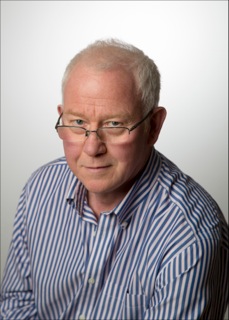
Every week, we publish interviews of the guests for the #Babishai2016 Poetry Festival, scheduled from 24 to 26 August in Kampala. Here’s Graham Mort, Professor of Transcultural Literature at Lancaster University , author of more than nine volumes of poetry and who can’t wait to return to Uganda.


Graham Mort  (Courtesy photo)


1.      You have nine volumes of poetry to your name. Were there significant changes in your poetry after the first three volumes?
Well, I think it’s been more a process of evolution rather than rapid change. The first three collections explored some of the things I was most interested in – landscape and places, politics, violence, conflict, work, forms of social injustice. I think that my poems became more complicated after that period, so I’d try to build more themes into the same poem. I don’t like poems that preach, so my other preoccupation was trying to make poems that got people to think, but didn’t tell them what to think. So for me the personal and the political have always worked together, often with the underpinning of a very distinct location. The more I’ve travelled, the older I’ve become, the more those locations have opened out new dimensions in the poems.But one constant has been writing about birds in both my poems and my prose. One of my richest experiences of Africa was visiting lake Mburo in Western Uganda – the birdlife there is amazing and I found that very affecting. But even in Kampala there are birds everywhere, the most I’ve seen in any city in the world. So they’re a constant thread through my work that’s been there from the beginning, though they’re never really just about themselves. I guess they’re emblems of flight, freedom, the ability to soar above everything and look down in a predatory way, like writers.


Students at the 2011 Lancaster University Summer school where Graham Mort teaches.


2.      Last year you visited Vietnam to talk about poetry. Briefly describe the objectives and outcome of that visit.
This was a visit I made to the Asia Pacific Poetry Festival in Hanoi. It was large event mounted by the Vietnam Writers’ Association that brought together about 100 poets from all over the world – many from current or former communist bloc countries such as Cuba, Poland, Czechoslovakia, China, and Russia. But also from Indonesia, the US and – of course, me from the UK.  Like many people of my generation, I grew up with the Vietnam War raging on the news media, so that was a formative time in terms of our political beliefs and affiliations. It was very moving to see this beautiful country, still in recovery, and to meet such a graceful people who had managed to defeat the military might of the US through sheer persistence and self-belief. It was also very moving to meet American veterans who had fought in Vietnam through conscription, but had found the courage to go back there and meet Vietnamese writers, who have since befriended them.  The aim of the festival was to create insight into Vietnamese culture and poetry and it certainly did that in a powerful and long-lasting way.

2015 Writing for Liberty Conference at Lancaster University
3.      In 2002 and 2003 when you launched the Crossing Boarders Writing Mentorship scheme in Sub-Saharan Africa. What were the major changes you saw in writing amongst the writers of the program?

I’d been writer–in-residence at Makerere University for the British Council in 2001 and I fell for Uganda and its people almost from the moment I stepped from the plane. There I was in Uganda for the first time with no one to meet me, this shy Englishman, yet it was just extraordinary. During my visit I met many young writers whose work was influenced by rather archaic models of poetry and, at that time, there were virtually no Ugandan writers on the school curriculum. So it felt as if writers working in English had a very outdated sense of contemporary writing in English. When I built a team of mentors in the UK, I wanted to find professionals writers who also represented the cultural diversity of the UK. When they came together with young Ugandan writers – and later with those across sub-Saharan Africa – I think there was a recognition that we were working together in a common purpose of cultural exchange and writing development, not in a hierarchical relationship as teachers and students. In fact, we were very were keen to avoid that perception. Uganda was conspicuous because of the way that young writers gained confidence in their work and in their own voices. They began to publish their writing and to win significant literary prizes. But this wasn’t just one-way traffic, the writers who worked as mentors from the UK all visited African countries and that had a profound affect on many of them.

4.      Your session at the #Babishai2016 Poetry Festival is called Working with Words. Who is your target and what can participants expect?
I haven’t worked out the fine details of my workshop yet, but I want to get down to the idea that the work of poets is to build poems in the way an engineer builds a complicated structure, or the way a composer harmonises a piece of music but includes dissonant elements. It’s important to understand the nature of the materials we’re using: the extraordinary energy and potential of language, the interrelatedness and inherent ambiguity of words. The American poet, Robert Lowell said that a poem doesn’t just describe an event: it is an event. By that he meant it was an event brought about by language that happens in the realm of language. The ability to speak about how we think, feel and experience the world is uniquely human, it expresses our individuality and difference, but also the solidarity that takes place between humans when we communicate. I’m hoping to provide a workshop for anyone interested in the ability of language to describe this world whilst inventing other ones. Oh, and I should say that a sense of humour will be essential!

5.      Why was it important for you to accept our invitation?
When I first came to Uganda in 2001 I was received with warmth and generosity by everyone I met. In a way this helped me to understand things about myself – a middle-aged writer from the northwest of England caught in the vortex of a Ugandan general election, with all the tensions of that time sparking around me. I even played cricket at Lugogo stadium for a local team. So here I was, out of my comfort zone, but I was also thinking about home and writing about it, making connections. I’ve been an educator all my life, so it was natural to want to set up a new project,to respond to thetrust and generosity I’d received in some way. That’s why I started Crossing Borders and then the Radiophonics project that led to the Under the Sun broadcasts by Ugandan and Nigerian writers. But I have a much more selfish reasons, which is that I love being in Uganda and miss it when I’ve been away too long! I’ve been back to work with the women writers at FEMRITE – who were instrumental in opening up the writing scene in Kampala for me when Goretti Kyomuhendo was in charge. Kampala is a rapidly changing city and that includes its literary life. I was really honoured to be asked onto the Babishai Niwe board and then to be invited to the festival. I want to see what’s going on now, in 2016 – and, of course, to meet up with some old friends. I’m going to stay at the Guest House at Makerere, drink a Bell lager or two, and tune into the political discussions on the terrace as the city lights up at night.

6.      What are the two main subjects you find yourself constantly writing about?
That’s a really tricky question when it comes to poetry.  It seems an obvious question but writers nearly always take evasive action when they’re asked what their poems are about, because poems are always reaching beyond language to the ineffable. I suppose ‘love’ is an obvious answer to that, the way it endures and is redefined as one gets older. Louis Armstrong said that without love a musician couldn’t play. But that kind of love is not just for another individual, it’s the sense of importance we attach to life and the vitality of language. The other constant dimension for me is definitely that sense of exploring location: not just the present moment of a place, but history and future, too. I guess writing about places also involves the feeling of being out of place. Maybe that’s how we understand ourselves best, when we’re taken out of our natural element and have to try to breathe somewhere else. It’s also a tricky question, because poems themselves try to evade obvious subject matter or to subvert it. Back to Robert Lowell. It's not so much that a poem is about its subject, it is its subject. Each poem is really complex and individual: we don’t say that people are about themselves; they are themselves.

7.      How do you feel towards art for social change?
It’s one of the main reasons that I return to Africa and why I’ve been working in Kurdistan recently. African writers, in particular, have always seemed to believe that writing can redress social and political injustice. It’s no coincidence that some of the towering moral figures in Africa are writers rather than politicians. I think writers also know that you have to forgive in order to understand, in order to create a poem or a narrative that is more than a judgment, that can synthesise a new vision for the future. I think Nelson Mandela was a great politician because he understood that kind of forgiveness and reconciliation. In my own work – especially in prose fiction – this is something that I’ve explored, the way we need to confront injustice, but can’t merely judge. Injustice is its own judgment when exposed. My last book of stories, Terroir, is largely concerned with forms of violence against the individual. It’s true of some of my poems, too, but poems also need to celebrate life in a positive way. Sometime it feels that I permit myself those more joyful events, those glimpses of irony, humour and beauty, the ways that poems remake experience and show us things just beyond our understanding.So social change, realisation, insight, can be brought about in many ways, including – or especially - by an artist being true to themselves rather than to a political agenda. That takes me back to those bird poems and how mysterious, miraculous and moving things we almost take for granted can be when they’re remade through words.

We look forward to hosting you. Any concluding remarks?
Just that I’m so much looking forward to coming back. When I step off the plane I’ll catch that incredible scent in the air, the sense of tumult and excitement that is Entebbe, Kampala, Uganda.Then black kites and marabou storks soaring above as we drive towards the city centre.There are lots of memories in Uganda for me, so there’s always a little sadness, something a little wistful about going back to a place that has been important in one’s past. I’ll be thinking about homeand writing, bridging that space between continents with words. Then, after the festival, I’llbe flying to Johannesburg where I have work to do and some more old friends to meet up with!

In partnership with Praxis Magazine, we’ll be publishing weekly interviews of the guests for the #Babishai2016 Poetry festival.
Tel: +256 751 703226

Twitter: @BNPoetryAward